Complete E-waste Recycling Machinery System
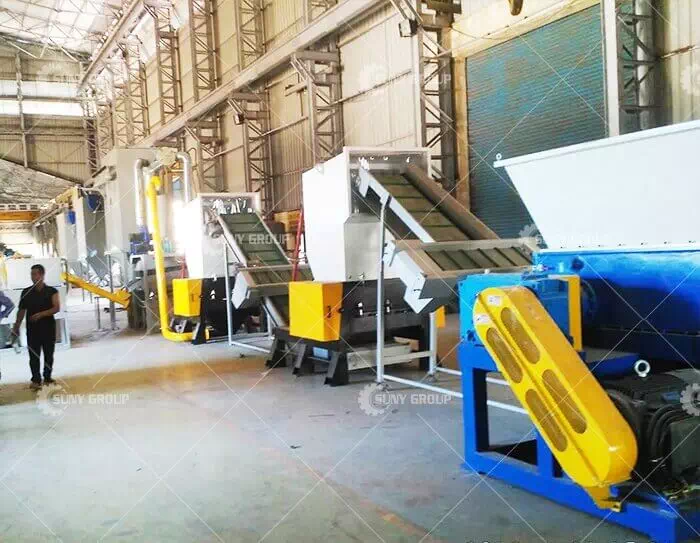
A comprehensive e-waste recycling system utilises three core pieces of equipment—PCB component disassembly, circuit board crushing and sorting, and precious metal recovery—to separate valuable materials such as PCBs, copper, gold, silver, and palladium from end-of-life electronic products, thereby providing the equipment infrastructure for continuous, large-scale recycling.
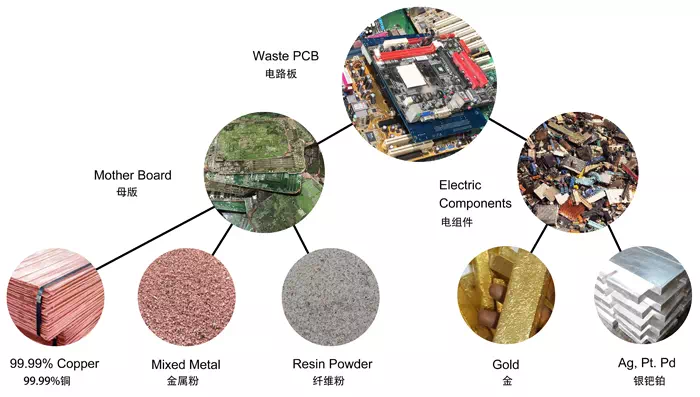
E-waste Recycling Process
1. PCB Component Disassembly: Separating High-Value Components First
At the front end of the production line is the PCB component disassembly machine, primarily used to process chips, capacitors, and other electronic components from waste circuit boards. The equipment employs heat to soften the solder joints, after which the components are separated from the PCB substrate through rotation and friction within the drum.
Compared to relying entirely on manual disassembly, mechanised processing reduces the workload whilst preserving the integrity of the components as much as possible. The disassembled materials can be further sorted, whilst the PCB motherboards proceed to the subsequent crushing stage. This step is particularly important for memory modules, connectors, and electronic components with gold plating, as the value and subsequent processing methods vary depending on the material.
2. PCB Crushing and Sorting: Mechanical Equipment Separates Copper from Non-metallic Materials
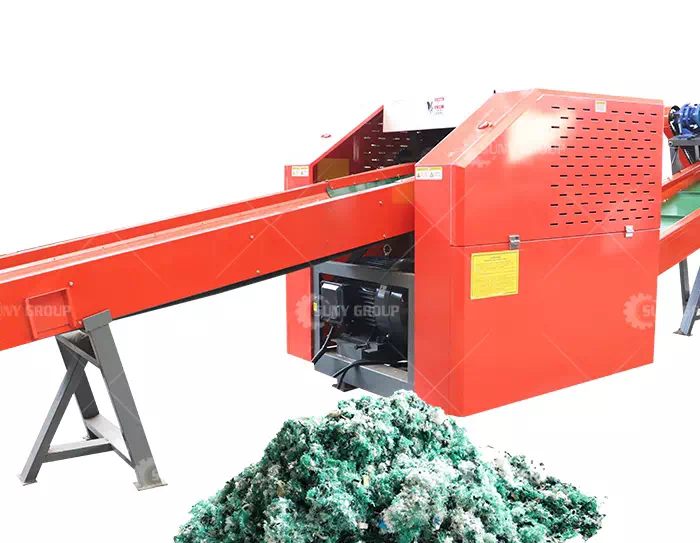
The dismantled PCB motherboards first enter a twin-shaft shredder for coarse crushing, then pass through a hammer mill to further reduce particle size, before proceeding to the grinding system.
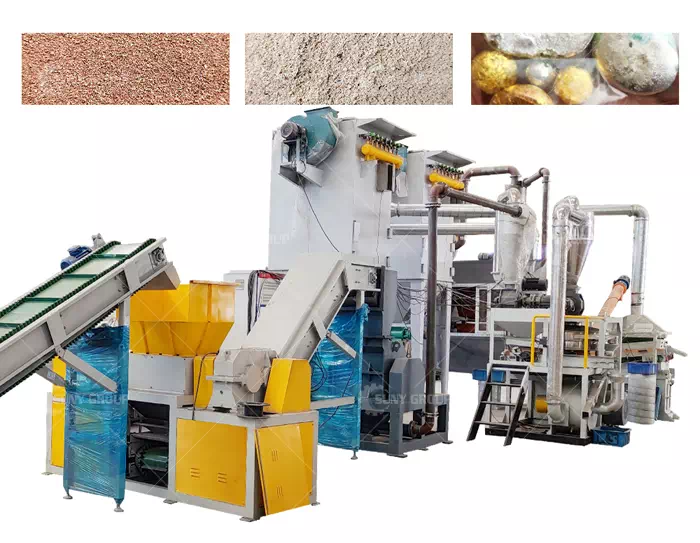
Following multi-stage crushing and grinding, the system utilises physical methods such as vibrating screens, air classification and electrostatic separation to process the mixed particles, gradually separating metals from non-metallic materials such as resin. This ultimately yields relatively concentrated copper metal fractions and resin powder.
The key to this process lies not in the crushing capacity of any single piece of equipment, but in the coordination of particle sizes between different units. Coarse crushing is responsible for increasing throughput, whilst fine crushing and grinding are responsible for liberating the metal; screening and separation equipment, in turn, determine the final separation efficiency. Consequently, the configuration of the entire production line must be tailored to the type of PCB, feed size, and target output.
3. Precious Metal Recovery: A Complete Process from Dismantling to Fine Refining
For materials containing precious metals such as gold, silver and palladium, the system can also be configured with automated precious metal stripping and refining equipment. This equipment integrates precious metal stripping, recovery and electrolytic refining into a single processing system, utilising hydrometallurgical processes to selectively treat the target metals.
Consequently, a complete e-waste recycling plant is not merely about ‘shredding electronic waste’, but rather involves establishing a continuous chain of equipment centred on disassembly, crushing, sorting and precious metal recovery. Depending on the composition of different types of electronic waste, the front-end disassembly methods, crushing particle size, and sorting processes can be adjusted to ensure that copper, resin, and precious metal materials are directed to the appropriate subsequent processing stages.
Recommend products
CONTACT US:
If you have any requirement or suggestion, please fill in the form and send to us, thanks!E-mail:[email protected] | Whatsapp:+8613674945231