Electric Scrap Copper Cable Wire Recycling Machine
An electric scrap copper cable wire recycling machine is a specialized piece of environmental protection equipment designed to process waste wires and cables. Through a process of crushing, screening, and airflow vibration separation, it achieves highly efficient separation and recovery of copper and PVC plastics. Capable of handling various types of household wires, communication cables, and automotive wiring harnesses within a diameter range of 0.1–30mm, this machine effectively enhances the recycling and reuse rate of both copper and plastics.
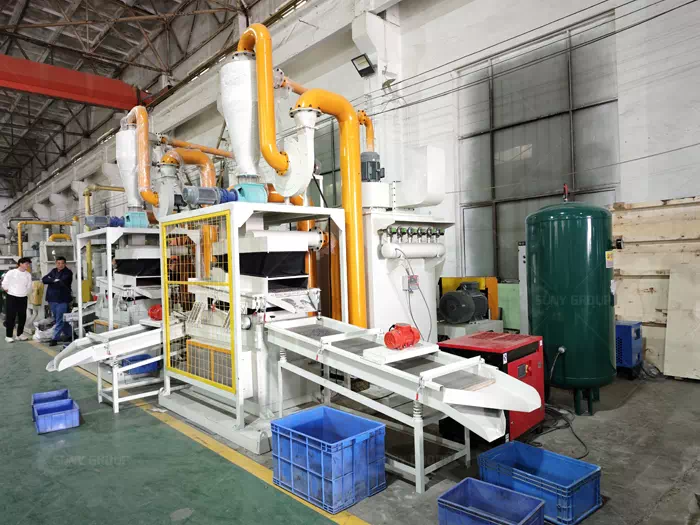
Electric Scrap Copper Cable Wire Recycling Machine
Equipment Structure and Scope of Application
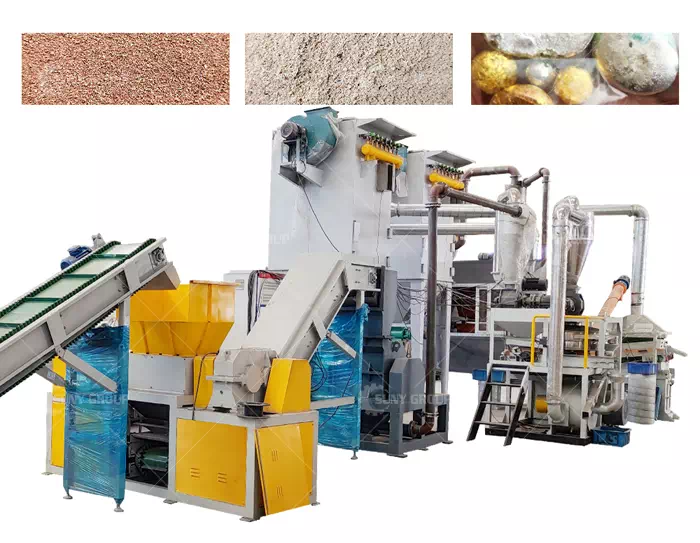
This cable recycling equipment typically consists of a shredding unit, a crushing system, conveying devices, a gravity separation system, and a dust collection apparatus, all integrated into a modular structural design.
The equipment offers significant flexibility in installation and commissioning, allowing for customized configurations based on production capacity requirements. It features a broad range of material compatibility, covering household appliance wires, telephone lines, network cables, and automotive wiring harnesses. It can process thin to medium-diameter cables, making it suitable for most urban electronic waste (e-waste) processing scenarios.
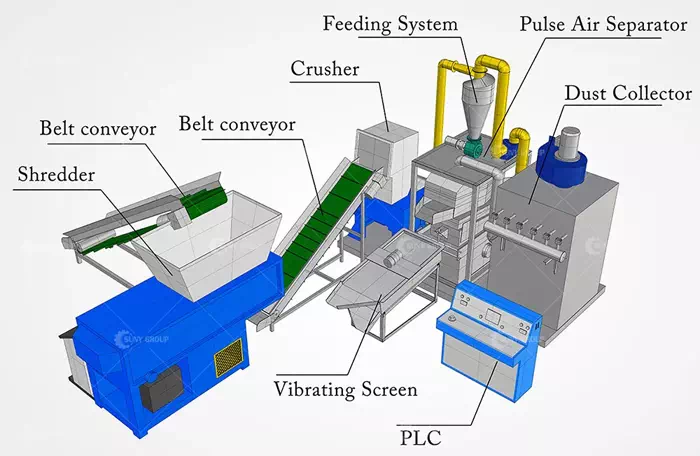
Electric Scrap Copper Cable Wire Recycling Machine Structure
Processing Technology and Workflow
Crushing: When the equipment is in operation, waste wires first enter the crushing system, where they are chopped into a uniform, granulated mixture. At this stage, the copper and PVC are fully liberated from each other but remain mixed together.
Separation: The granulated material then enters the gravity and airflow vibration separation system. Driven by airflow and mechanical vibration, the materials are stratified and separated based on the density differential between copper and plastic.
Collection: Due to its higher specific gravity, copper granules are collected independently, while the lighter plastic fractions are discharged through a separate outlet.
Eco-friendly Note: The entire procedure utilizes a dry-type process that requires no water, thereby eliminating secondary wastewater pollution. Additionally, a built-in dust collection system controls and contains dust dispersion.
Practical Separation Optimization and Adjustments
In actual production, variations in the structure of waste wires directly impact separation efficiency. Therefore, equipment operations must be dynamically adjusted based on the material type to ensure a stable recovery rate.
Fine Wires (0.1–1mm, e.g., telephone lines, network cables): The copper strands in these wires are extremely thin and prone to pulverization. The key to processing them lies in reducing the blade roller speed and airflow volume to prevent over-crushing and subsequent copper powder loss. Maintaining uniform granule size ensures a "gentle liberation."
Medium Wires (1–10mm, e.g., household power cords): This is the most stable material range. The system generally runs on standard rotation speeds and stable airflow parameters. By ensuring continuous feeding and uniform granulation, the separation rate can consistently reach 99%.
Thick Wires (10–30mm, e.g., automotive harnesses, industrial cables): These wires have complex structures. Operators need to increase the crushing torque, reduce the feeding speed, and perform pre-cutting or pre-shredding if necessary. Concurrently, enhancing vibration stratification and auxiliary wind pressure ensures that copper and plastic are fully disintegrated before entering the separation stage.
Mixed Waste Wires: This is the most common feedstock in industrial recycling. It typically requires a multi-stage crushing approach (coarse crushing followed by medium crushing). Airflow parameters are dynamically adjusted based on the machine load, and magnetic separation or manual sorting is used to remove ferrous impurities, stabilizing overall operational efficiency.

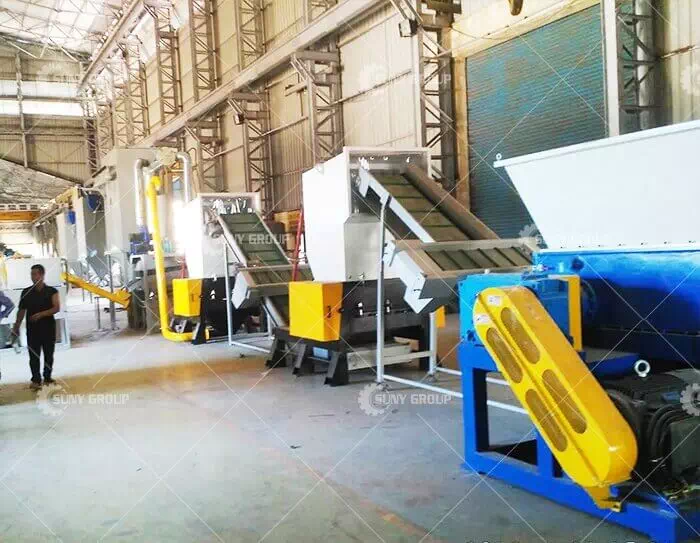
Indian Copper Wire Recycling Machine Customer Site
Recovery Value and Application Features
The core value of this equipment lies in maximizing the recovery rate of metal resources from waste wires. While traditional incineration is simple, it causes oxidative loss of copper and severe environmental pollution. In contrast, mechanical separation preserves the original purity of the copper (achieving a separation rate of 99% or higher), while the plastic components can enter a re-granulation pipeline for secondary utilization.
Recommend products
CONTACT US:
If you have any requirement or suggestion, please fill in the form and send to us, thanks!E-mail:[email protected] | Whatsapp:+8613674945231