Waste Wire Crushing Sorting and Recycling Equipment
Equipment for the shredding, sorting, and recycling of waste electrical wires and cables effectively separates the copper cores from the plastic insulation through shredding, granulation, and separation processes. It plays a vital role in improving the resource recovery rate of waste cables and reducing the costs associated with manual dismantling.
The role of waste wire shredding equipment in the recycling process
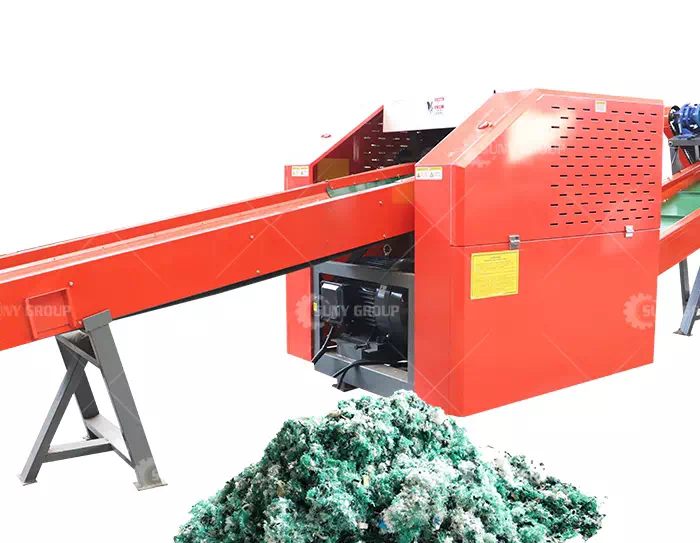
During the recycling of waste cables, pre-treated wires typically require further shredding to ensure the copper wires are thoroughly separated from the outer plastic insulation. Wire shredders are typically installed downstream of coarse crushing equipment. They use high-speed rotating blade assemblies to finely shred the cables, processing larger cable materials into uniform small particles, thereby providing suitable material conditions for subsequent copper-plastic separation.
Taking a 1 metric tonne per hour (TPH) cable recycling line as an example, pre-shredded waste cables enter the blade-type shredder. The equipment can adjust the blade clearance to accommodate different wire diameters and material properties, ensuring the output material maintains a relatively stable particle-size distribution. A uniform particle size enhances the operational efficiency of subsequent separation equipment, such as air classification and wet separation, whilst minimising instances of plastic inclusions in copper particles and residual copper in plastic.
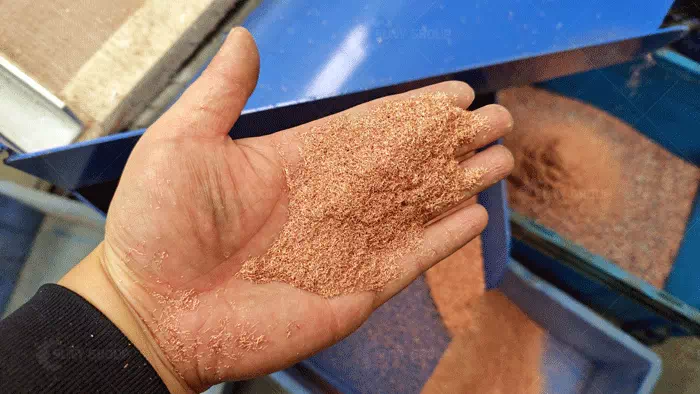
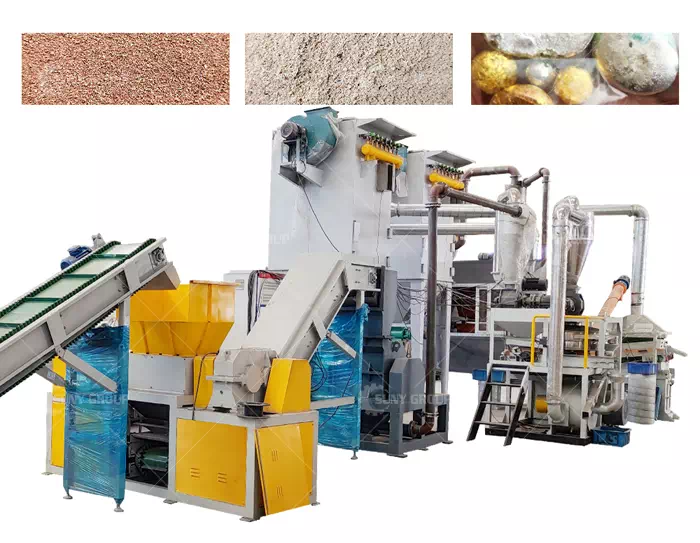
Pure Copper Granules
Structural Features and Separation Performance of Cable Shredders
This type of cable shredding equipment primarily comprises a feeding system, a crushing chamber, a rotating blade assembly, fixed blades, a screen and a power system. During the crushing process, the blades shear and tear the cables rather than simply compressing them; this helps to better preserve the integrity of the copper particles and minimises the generation of metal powder.
In actual production, the crushed mixed particles typically proceed to the sorting stage:
Air separation system: This utilises the difference in density between copper and plastic particles to separate the two materials using an air stream; it is suitable for dry recycling processes;
Wet separation system: This utilises the buoyancy and sinkage characteristics of the materials to separate them, offering high sorting precision and is suitable for production lines requiring high copper recovery purity.
The appropriate configuration of shredding particle size and sorting parameters is a key factor influencing the final copper recovery rate. The operational stability of the equipment, the wear resistance of the cutting tools, and the continuous production capacity all directly impact the economic efficiency of the entire cable recycling line.
Applications and Equipment Configuration of Industrial Cable Recycling Lines
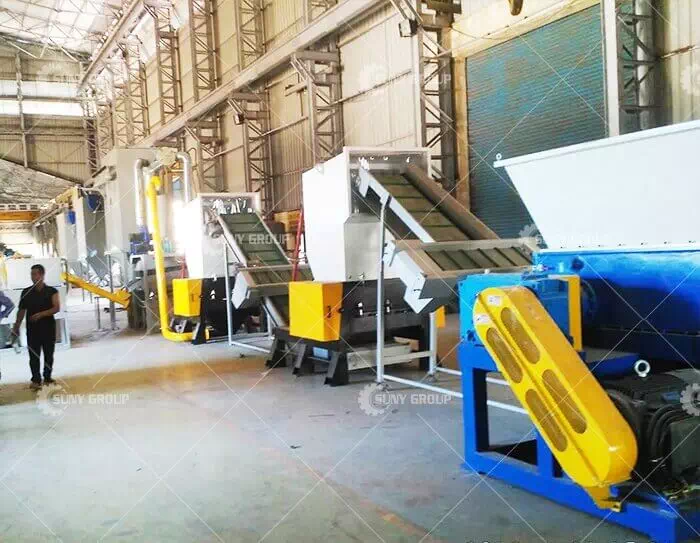
Depending on the required throughput, cable recycling systems can be designed as small-scale production units or configured as industrial production lines with a capacity of 1 metric tonne per hour or even higher. For recycling enterprises, when selecting equipment, it is essential not only to consider capacity parameters but also to undertake a holistic design that takes into account the type of raw material, the copper content of the cables, the target product purity and site conditions, and to choose a suitable equipment configuration based on the actual characteristics of the raw material.
Recommend products
CONTACT US:
If you have any requirement or suggestion, please fill in the form and send to us, thanks!E-mail:[email protected] | Whatsapp:+8613674945231