How Does Aluminum Decoating Increase Recycling Profit and Purity?
An aluminium scrap paint stripping furnace is a specialised piece of equipment that utilises a controlled heat treatment process to remove ink, coatings, and organic contaminants from the surface of scrap aluminium. Its function is to reduce the burn-off rate, minimise flue gas pollution, and enhance the purity of recycled aluminium before smelting; it is a crucial step that cannot be overlooked in the recycling of beverage cans, the processing of UBC (Unsorted Bulk Collected) materials, and the production of high-quality recycled aluminium.
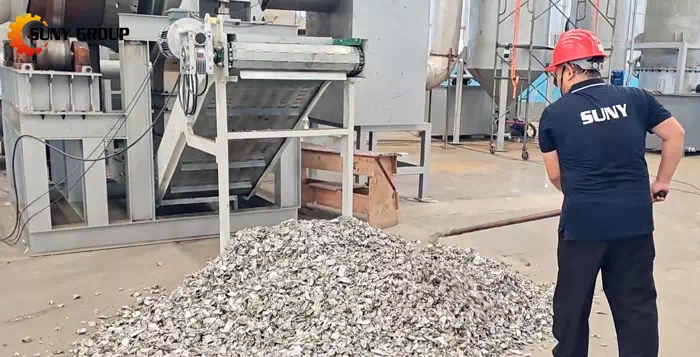
Paint-stripping Determines the Recycling Value of Recycled Aluminium
Large quantities of recycled aluminium cans, window and door profiles, aluminium sheet offcuts and automotive aluminium components typically have paint, printing ink, resin or plastic film adhering to their surfaces. If these materials are fed directly into the smelting furnace without prior treatment, the combustion of these coatings not only increases the burden on flue gas treatment systems but also leads to accelerated metal oxidation, resulting in a significant rise in the aluminium burn-off rate.
Industry data indicates that when paint-coated scrap aluminium is smelted directly, the metal loss rate is typically 3–8 per cent higher than for material that has undergone paint stripping. For enterprises processing thousands of tonnes of scrap aluminium annually, the financial benefits from reduced metal loss alone are substantial. Furthermore, with lower impurity levels, the quality stability of aluminium ingots is significantly improved, making them better suited to meet the raw material requirements for cast aluminium and recycled wrought aluminium.
Improving Processing Efficiency and Thermal Utilisation
The equipment typically comprises a feeding system, the main paint-stripping furnace, a combustion system, an exhaust gas purification system and an automatic control system. During operation, the furnace temperature, residence time and air flow rate can all be adjusted according to the type of raw material to accommodate the processing requirements of different materials, such as UBC aluminium cans, spray-painted profiles and colour-coated aluminium sheets.
As organic matter is thoroughly pyrolysed within the furnace, the amount of fumes and inclusions in the subsequent smelting process is significantly reduced, helping to improve smelting efficiency and reduce the load on the dust extraction system.
With the aluminium recycling industry’s ever-increasing demands regarding carbon emissions and metal utilisation rates, the paint-stripping process is gradually evolving from an ‘optional feature’ to a standardised procedure. Particularly in the fields of beverage can recycling and high-end recycled aluminium, the effectiveness of paint stripping now directly impacts the selling price of the final product and the company’s profit margins.
Currently, the aluminium scrap paint-removal furnace developed by SUNY GROUP has been optimised in terms of continuous operational stability, uniformity of paint removal and continuous processing capacity. It can be integrated with systems such as crushing, sorting and smelting to form a comprehensive aluminium scrap recycling solution. Should you have any requirements or be interested in this solution, please feel free to contact us at any time for further information.
Recommend products
CONTACT US:
If you have any requirement or suggestion, please fill in the form and send to us, thanks!E-mail:sunymachine@gmail.com | Whatsapp:+8613674945231