Lithium-ion Battery Recycling System with Inert Gas Protection
The lithium-ion battery recycling production line is an automated system that integrates inert gas protection, sealed crushing, pyrolysis, fine grinding, and metal separation, enabling the recovery of black powder, copper, aluminum, and battery casings from waste lithium-ion batteries.
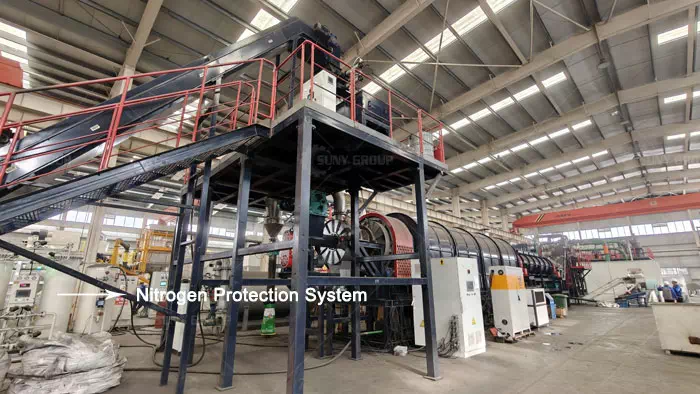
Lithium-ion Battery Recycling System with Inert Gas Protection
Inert Gas Protection and Sealed Crushing System
This production line employs inert gas protection technology and is equipped with a vacuum airlock feeding device, allowing used lithium-ion batteries to enter the sealed processing system without the need for prior discharge. Compared to traditional pretreatment methods that require separate discharge, this design reduces the number of front-end operational steps and lowers the risk of short circuits and thermal runaway during the feeding and crushing processes.
Once the batteries enter the crusher, they are broken down into smaller particles through the shearing and compression actions of the cutting tools, creating suitable feed conditions for subsequent pyrolysis and material separation. Inert gas protection, sealed conveying, and temperature monitoring must operate in coordination to ensure continuous material processing under controlled conditions.
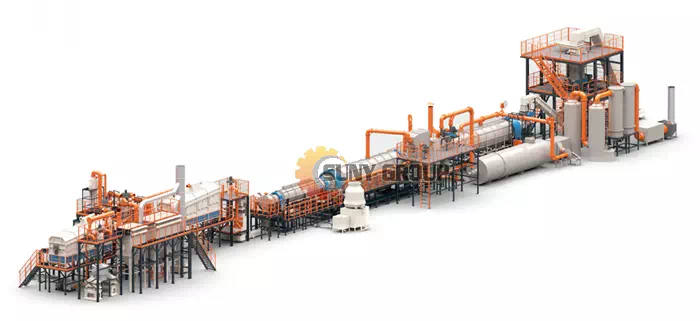
Lithium Battery Recycling Machine Structure Diagram
Pyrolysis and Multi-Stage Sorting Equipment
The crushed material enters the pyrolysis furnace, where controlled heating causes the electrolyte and some organic components inside the battery to volatilize or decompose, while further dissociating the electrode materials from certain metals and casing components. Pyrolysis temperature and residence time must be adjusted based on battery type, material composition, and processing capacity.
After pyrolysis, the material undergoes processes such as battery casing separation and ultra-fine grinding to further release electrode powders adhering to copper foil, aluminum foil, and other carriers. Subsequently, the material enters a new copper-aluminum separation system, where sorting equipment tailored to different material particle sizes and physical properties effectively separates copper, aluminum, and black powder.
Among these steps, the ultra-fine grinding process directly impacts the effectiveness of subsequent sorting. Grinding is not necessarily better the finer it is; it is essential to balance the degree of powder dissociation, the integrity of metal particles, and the equipment’s processing capacity.
Black Powder Collection and Exhaust Gas Treatment System
After sorting is complete, black powder is centrally recovered via a dedicated collection device, while copper, aluminum, and battery casing materials are directed to their respective collection stages to facilitate subsequent purification, processing, and resource recovery.
Given that the crushing and pyrolysis of lithium-ion batteries may generate exhaust gases containing organic compounds, dust, and other pollutants, the entire production line is also equipped with a comprehensive exhaust gas treatment system. Through gas collection, purification, and subsequent treatment equipment, process exhaust gases are centrally treated to reduce fugitive emissions.
This lithium-ion battery recycling system effectively integrates enclosed crushing, pyrolysis, fine grinding, copper and aluminum separation, and exhaust gas treatment into a single production line. It offers customized solutions based on the customer’s battery type, feed specifications, target production capacity, and product recovery requirements.
Recommend products
CONTACT US:
If you have any requirement or suggestion, please fill in the form and send to us, thanks!E-mail:[email protected] | Whatsapp:+8613674945231