What Types of Raw Materials Can an Aluminium-plastic Separator Process?
An aluminium-plastic separator is a machine designed for the crushing, sorting, and metal recovery of composite aluminium-plastic materials. It is primarily intended for aluminium-plastic composite structures found in pharmaceutical packaging, food packaging, and industrial scrap, utilising physical crushing and electrostatic separation to achieve the effective recovery and reuse of aluminium powder and plastic pellets.
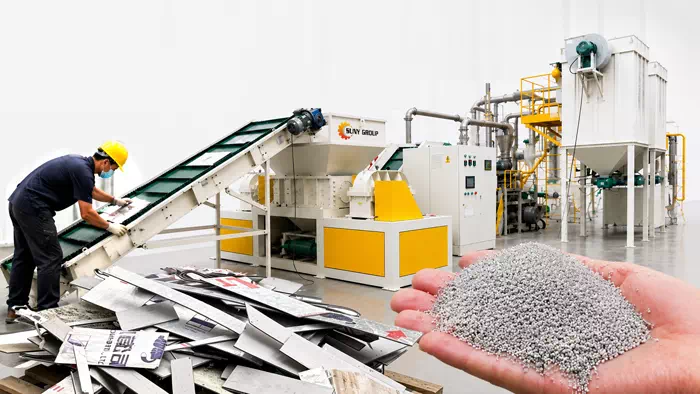
Types of raw materials that can be processed and their structural characteristics
This type of equipment is primarily designed for ‘aluminium + plastic’ or multi-layer composite materials. Typical raw materials include: aluminium-plastic blister packs from the pharmaceutical industry (Pharma blister), medical board scrap, medical blister waste, toothpaste tubes, composite films for food packaging, aluminium-plastic composite films, aluminium-plastic strip materials, aluminium-plastic composite panels (ACP), and aluminium stamping scrap.
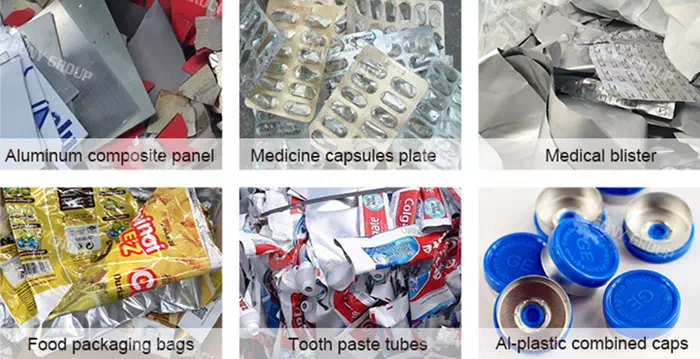
A common characteristic of these materials is their distinct layered structure, with the aluminium layer typically ranging in thickness from 0.02 to 0.2 mm. As they are thermally laminated with PE, PP, or PVC plastics, direct separation using conventional methods is difficult; therefore, separation is achieved through a process involving mechanical crushing, screening, and air classification.
Processing Flow and Core Structure of Aluminium-Plastic Separation Equipment
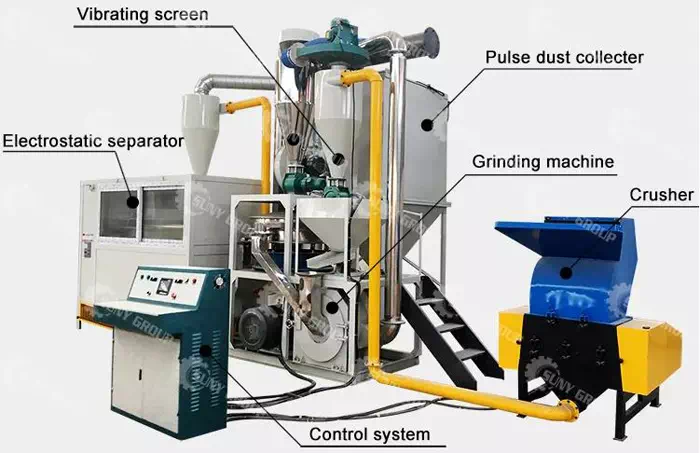
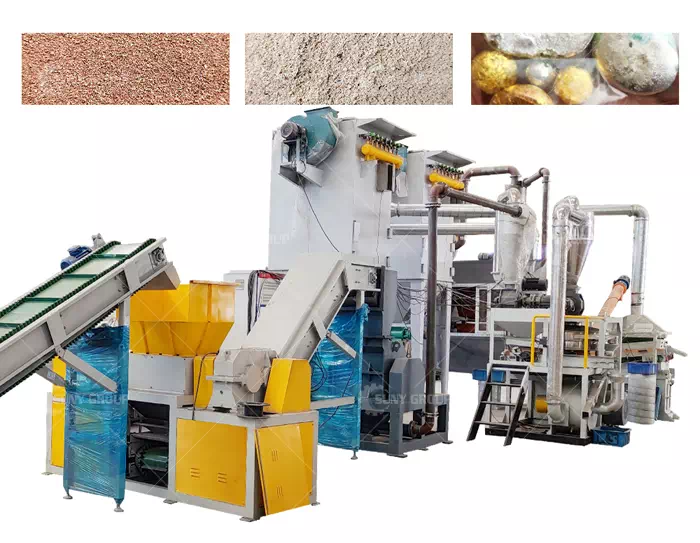
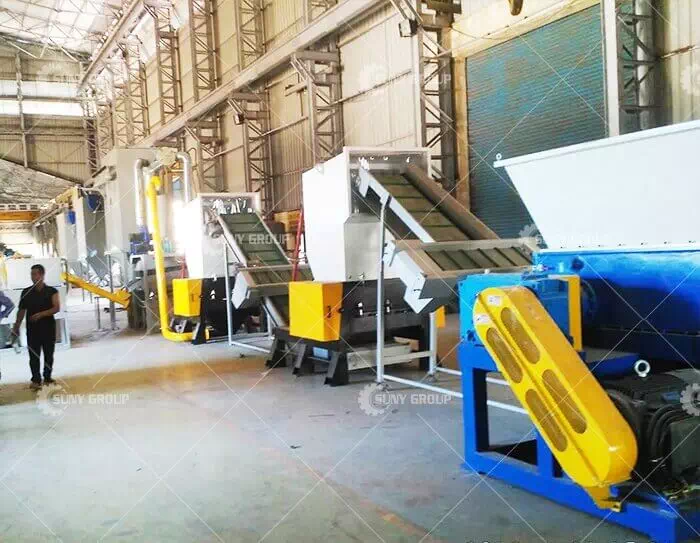
The equipment typically comprises a crushing system, a conveying system, a separation system, and a dust collection system. The raw material first enters a twin-shaft or single-shaft shredder, where it is sheared into irregular particles measuring 5–30 mm; it then proceeds to a pulveriser for grinding, before finally entering the electrostatic separation zone.
During the separation stage, upon entering the electrostatic separation system, materials undergo in-depth sorting based on differences in electrical conductivity: aluminium, being a conductor, rapidly discharges its charge, whilst plastic, being an insulator, retains its charge. Under the influence of a high-voltage electric field, their trajectories differ, thereby achieving high-purity separation of aluminium and plastic.
Some high-end production lines are also equipped with multi-stage screening and recirculation sorting structures to enhance the purity and recovery rate of aluminium powder. These are complemented by dust collection systems to control dust dispersion, thereby improving overall operational stability and environmental performance.
Application Scenarios and Resource Value Analysis
This Aluminium-plastic Separator is widely used in pharmaceutical packaging recycling plants, recycled aluminium processing enterprises, and plastic recycling plants. In actual production, aluminium recovery rates typically reach 99.8% or higher (depending on the raw material composition), whilst the plastic can be processed into recycled pellets for use in modified plastic systems, thereby generating significant economic benefits.
Recommend products
CONTACT US:
If you have any requirement or suggestion, please fill in the form and send to us, thanks!E-mail:sunymachine@gmail.com | Whatsapp:+8613674945231