Small Cable Recycling Line With Tiny Shredder
Scrap wires and cables contain large quantities of recyclable copper and plastic. This small-scale cable recycling line is primarily designed to shred, grind, and sort mixed scrap cables, thereby separating copper granules from plastic. It is suitable for small-scale processing plants, scrap metal collection centres, and start-up cable recycling projects. The equipment has a small footprint and is simple to operate, whilst reducing the labour costs associated with manual cable stripping and improving the efficiency of copper recovery.
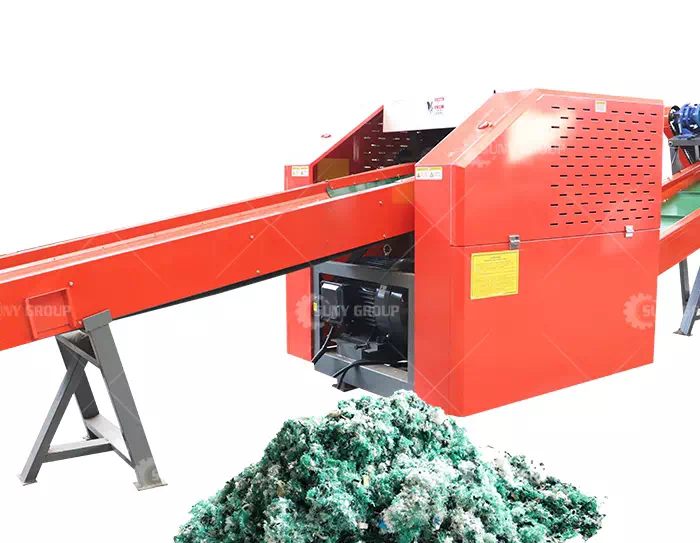
The Role of the Tiny Twin-Shaft Shredder
In the cable recycling process, the front-end shredding equipment directly influences the effectiveness of subsequent sorting. This small-scale recycling line is equipped with a mini twin-shaft shredder capable of pre-processing waste wires ranging from 2 to 50 mm in diameter, including telecommunications cables, power cables, automotive wiring harnesses, and certain types of industrial mixed cables.
The twin-shaft design ensures uniform shredding of highly tangled wires, reducing the workload associated with traditional manual cutting. The equipment features a low-speed, high-torque design, ensuring more stable operation when processing thicker cables, whilst also minimising dust and noise. For small-scale recycling plants, the advantages of this type of equipment lie in its compact structure, low energy consumption, and relatively straightforward maintenance.
The material size after initial shredding is more uniform, which improves the efficiency of subsequent copper-plastic separation and helps to reduce blockages.
Workflow of the Copper Granulator Sorting System
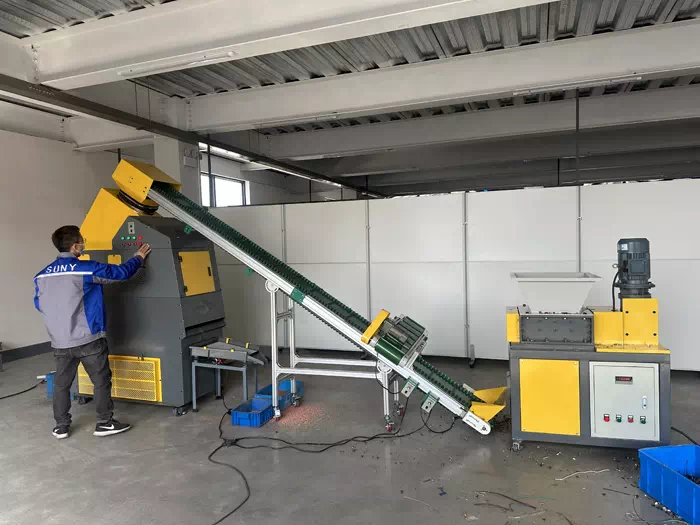
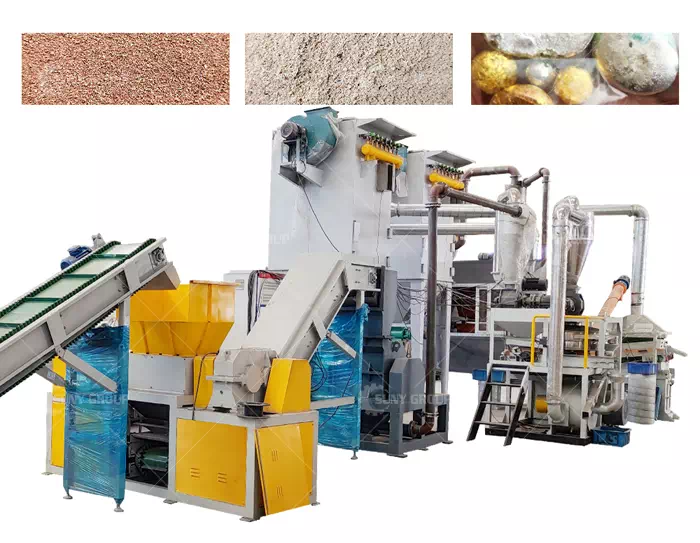
The shredded wire enters a small-scale copper granulator with a capacity of 30–50 kg/h for further processing. The equipment uses a crushing system to break the wire down into a mixture of copper granules and plastic, before utilising air classification and vibration separation principles to complete the separation of copper and plastic.
As copper and plastic have different densities, the sorting system effectively improves the purity of the recovered copper. This mechanised processing method is particularly efficient for fine wires, mixed wires, and certain types of waste wire that are difficult to strip by hand.
The small-scale capacity of 30–50 kg/h is well-suited to users with limited initial investment, as it meets daily recycling needs whilst allowing for easy expansion of equipment configurations in line with future business growth.
Who is small-scale cable recycling equipment suitable for?
Compared to large, fully automated recycling plants, these small-scale cable recycling lines are better suited to entrepreneurs new to the industry. The equipment features a simple overall structure, a small footprint, and relatively low space requirements, making it suitable for processing small batches of diverse waste cables.
Common application scenarios include:
Scrap metal collection centres
Small-scale resource recycling plants
Cable recycling processing points
Automotive wiring harness processing
Household appliance wiring recycling
For users with limited budgets who wish to improve processing efficiency, a small shredder paired with a copper granulator is a practical solution. Through mechanised processing, this not only reduces the time required for manual dismantling but also enhances the value of recovered copper resources.
With the ever-increasing demand for scrap cable recycling, compact, energy-efficient, and easy-to-operate cable recycling equipment is attracting growing attention from small and medium-sized recycling enterprises. The appropriate configuration of shredding and sorting equipment can help recycling enterprises improve processing efficiency whilst reducing operating costs.
Recommend products
CONTACT US:
If you have any requirement or suggestion, please fill in the form and send to us, thanks!E-mail:[email protected] | Whatsapp:+8613674945231