Solution for PCB Waste Recycling
Against the backdrop of rapid technological advancements in electronics, PCB circuit boards have emerged as one of the most valuable components for recycling within electronic waste. The core of a mature, efficient PCB waste recycling solution lies not in individual equipment, but in a systematic combination of devices centered around the process of “first dismantling, then sorting, followed by deep recycling.� The complete PCB recycling process achieves maximum resource value extraction through the coordinated operation of multiple specialized machines.
I. Front-End Disassembly and Intelligent Sorting Equipment
The first step in PCB recycling is not direct crushing, but pre-processing the entire board using electronic component disassembly equipment. This equipment employs heating, vibration, or physical impact to efficiently detach electronic components like chips, capacitors, and resistors from the circuit board surface. This process preserves component integrity while preparing them for subsequent sorting.
The disassembled mixture then enters a screening system. Multi-layer screens classify components by size, enabling preliminary separation of different specifications of electronic components and substrate fragments. Subsequently, magnetic separation equipment intervenes to precisely isolate ferromagnetic metal impurities, reducing the load on downstream equipment.
In high-end recycling solutions, AI-powered sorting systems can be integrated. Utilizing image recognition and algorithmic analysis, these systems identify and classify different electronic components, significantly enhancing sorting accuracy and automation levels. This approach is particularly suited for large-scale, standardized recycling facilities.
II. Bare Board Crushing and Metal Separation System
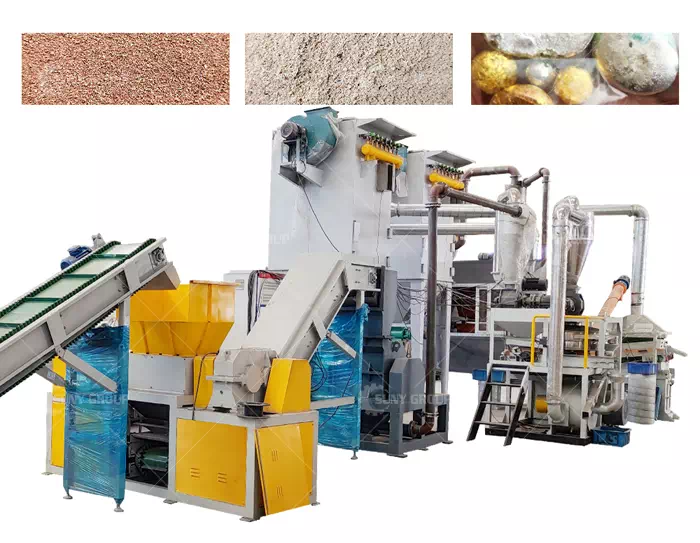
After component separation, the bare PCB mainboard enters the core crushing and sorting stage. Specialized circuit board crushing equipment employs a low-speed, high-torque design. This approach thoroughly dissociates copper foil, resin fibers, and other composite materials while preventing excessive pulverization of metals.
The crushed material undergoes multi-stage sorting. Techniques such as density separation, air classification, and electrostatic separation efficiently separate metals like copper from non-metallic powders. The key objective of this stage is to obtain the purest, most clearly defined metal concentrate possible, providing a stable raw material foundation for precious metal recovery.
III. Value of Precious Metal Extraction Equipment and Systems
Following physical separation, materials rich in precious metals like gold and silver enter specialized extraction systems. Engineered to address the distribution characteristics of precious metals within e-waste, these systems achieve efficient recovery through stable, controllable processes. The entire setup emphasizes safety, containment, and controllability, minimizing manual intervention to ensure long-term continuous operation.
Compared to simple crushing or outsourcing models, a comprehensive PCB recycling equipment system not only enhances metal recovery rates but also enables enterprises to clearly manage input-output structures, boosting overall profitability. Whether for new investors entering the e-waste industry or established recyclers seeking technological upgrades, this modular, scalable PCB waste recycling solution forms a crucial foundation for achieving long-term sustainable development.
Recommend products
CONTACT US:
If you have any requirement or suggestion, please fill in the form and send to us, thanks!E-mail:[email protected] | Whatsapp:+8613674945231