How to Recycle PCBs with Components?
Printed circuit boards (PCBs) containing components—such as capacitors, chips and sockets secured with solder paste—cannot be shredded directly. The first step in the recycling process involves the use of an automated PCB pyrolysis disassembly machine.
This equipment uses controlled indirect heating (typically with temperatures maintained between 180°C and 230°C, i.e. within the melting point range of solder) to soften the solder on the board’s surface. Subsequently, the machine utilises an internal rolling friction or vibrating screening mechanism to physically separate the electronic components from the bare board (motherboard).
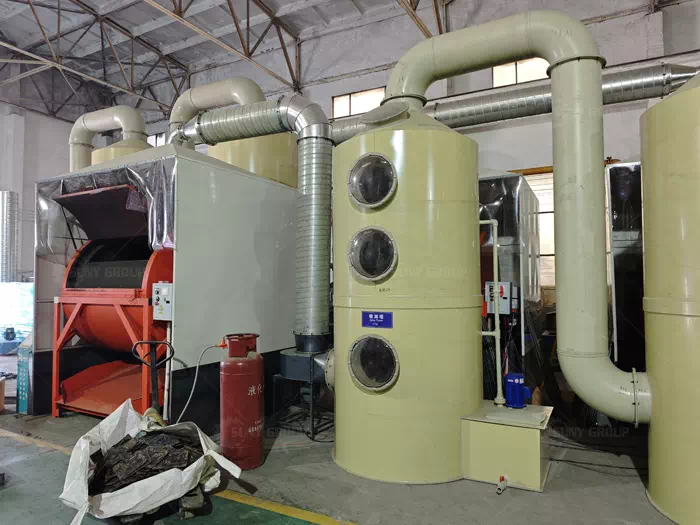
Automatic Components Dismantling Machine
Key outputs: The stripped-off mixture of electronic components (such as integrated circuits and capacitors containing precious metals) is collected separately to facilitate subsequent targeted precious metal refining.
Environmental Control: Trace amounts of fumes generated during the dismantling process are simultaneously channelled into dedicated activated carbon adsorption or photocatalytic oxidation units, ensuring that exhaust emissions comply with environmental standards.
Multi-stage Crushing and Air Classification: Physical Separation of Metals and Resins
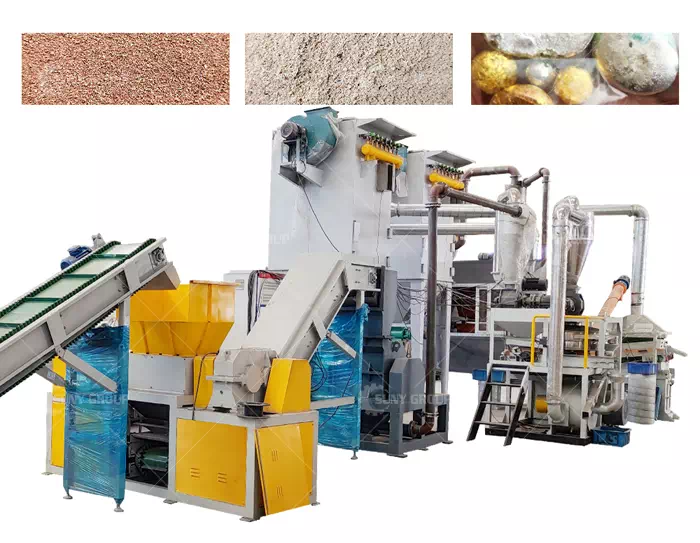
Once components have been removed, the bare boards consist primarily of copper foil, glass fibre and epoxy resin. The PCB crushing and sorting line achieves the complete separation of these three materials through purely physical and mechanical means.
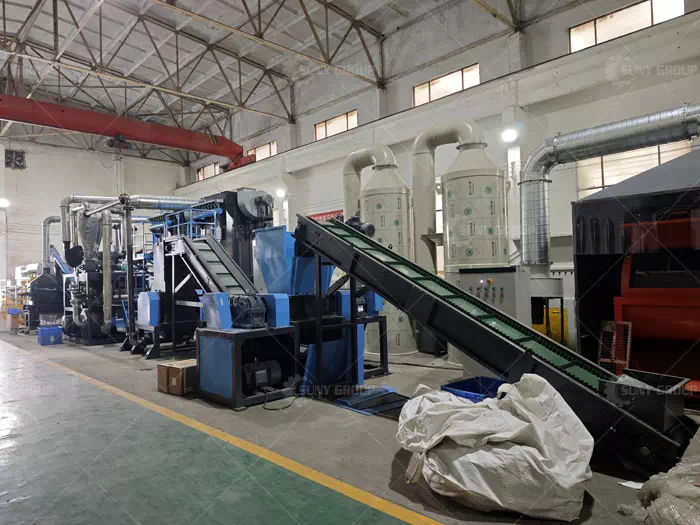
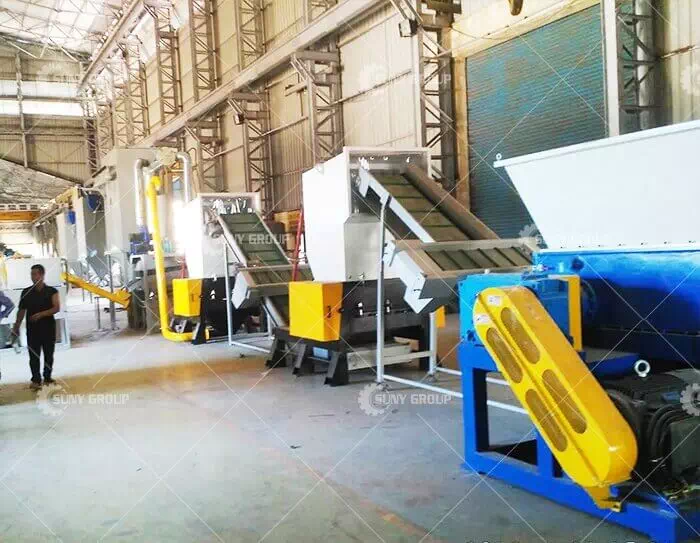
PCB Circuit Board Recycling Line
Two-stage crushing: The bare boards first enter a heavy-duty shear crusher for coarse crushing into centimetre-sized particles, then proceed to a high-speed turbine mill, where they are further refined into fine powders ranging from 20 mesh to 60 mesh, ensuring complete separation of metals from non-metals.
Air-Classification: The mixed powder undergoes primary separation under specific airflow and vibration frequencies, utilising the significant difference in density between copper (approximately 8.96 g/cm³) and the resin and glass fibre (approximately 1.5–2.0 g/cm³).
High-voltage electrostatic separation: For fine mixtures that are difficult to separate using air classification, a high-voltage electrostatic separator is installed at the end of the process. By utilising the high electrical conductivity of metals and the insulating properties of resin, precise separation is achieved within a high-voltage electric field of tens of thousands of volts, enabling the recovery of copper powder with a purity of over 95 per cent.
Compared with traditional incineration or strong acid leaching processes, this physical recovery solution produces no wastewater discharge; furthermore, compared with the extraction of primary minerals, it reduces energy consumption by approximately 70% for every metric tonne of copper recovered.
Consequently, the ‘pyrolysis dismantling + physical separation’ dual-process solution is currently the mainstream industrial method for achieving high-purity, low-energy-consumption recovery of component-containing PCBs.
Recommend products
CONTACT US:
If you have any requirement or suggestion, please fill in the form and send to us, thanks!E-mail:[email protected] | Whatsapp:+8613674945231