Aluminum Extraction Machine for Pharmaceutical Blister Packs
Pharmaceutical blister pack recycling equipment is designed to recover valuable materials from waste medicine blister packs, pharmaceutical aluminum-plastic scraps, and expired drug packaging. Through crushing, grinding, screening, and electrostatic separation processes, the system efficiently separates aluminum from plastic, improving resource utilization and reducing disposal costs.
What Makes Pharmaceutical Blister Pack Recycling Difficult?
Medical blister packaging is typically made by laminating aluminum foil and PVC plastic through a heat-sealing process. Because these two materials are tightly bonded together, conventional crushing methods often produce composite particles, which significantly reduce separation efficiency in later stages.
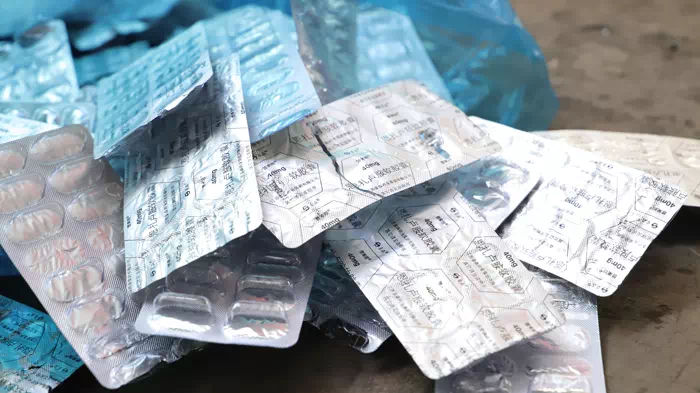
In addition, blister packs are generally small, thin, and lightweight, making mechanical separation more challenging than with conventional metal-plastic waste.
To address these issues, our aluminum-plastic separation line adopts a multi-stage processing design that gradually reduces particle size while increasing material liberation. Practical operation shows that when particle sizes are controlled within the range of 0.3 mm to 0.85 mm, electrostatic separation can achieve higher recovery efficiency and more stable purity performance.
What Equipment Is Included in the Recycling Line?
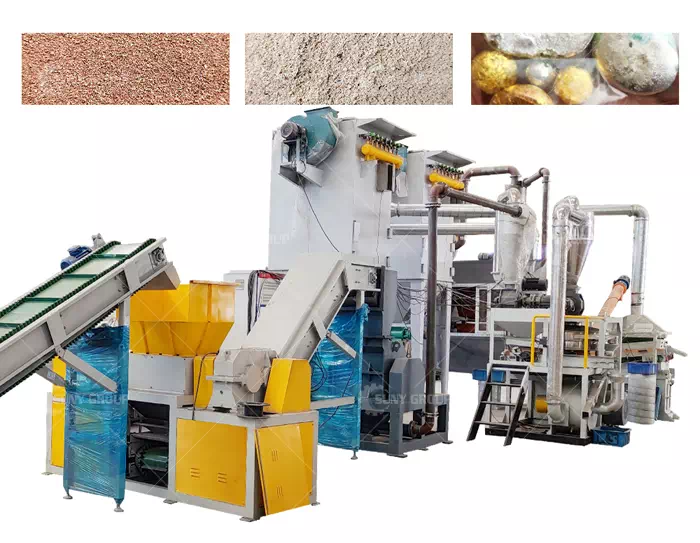
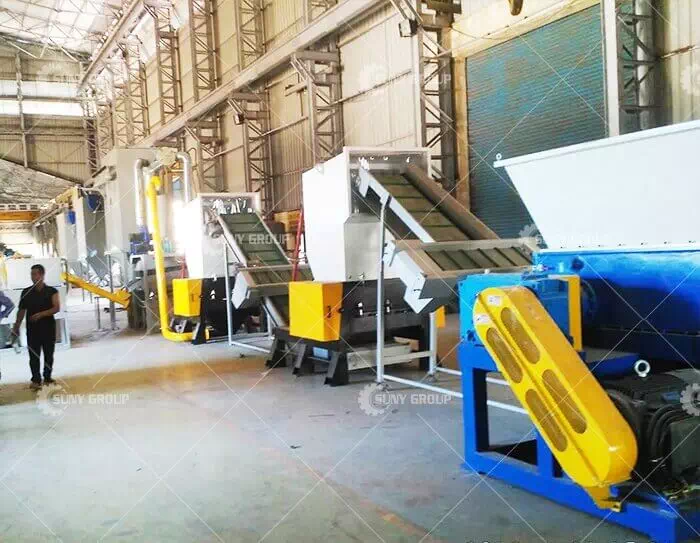
The complete recycling system mainly consists of a knife crusher, grinding mill, circular vibrating screen, and electrostatic separator. Each machine performs a specific function to ensure efficient material recovery.
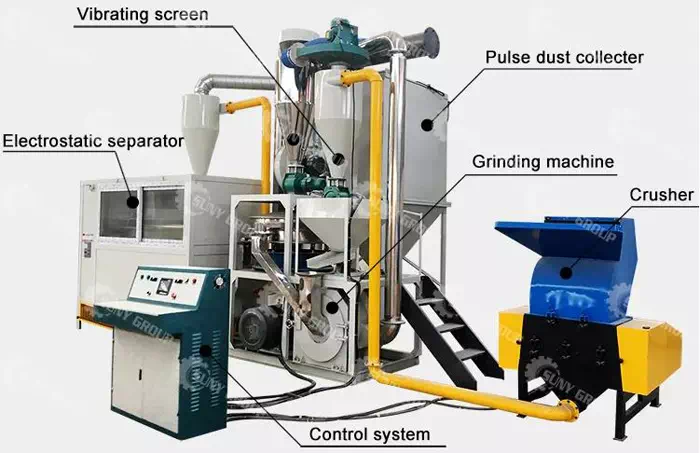
The process begins with the knife crusher, which uses high-speed rotating blades to reduce whole blister packs into particles of approximately 10 mm. This step decreases the load on downstream equipment and ensures uniform feeding.
The material then enters the grinding system for further pulverization. This stage is critical because the degree of liberation between aluminum foil and plastic directly determines the final separation quality. After grinding, the material is reduced to fine particles suitable for electrostatic separation.
Next, the mixed material passes through a circular vibrating screen for particle size classification. Oversized particles are automatically returned to the grinding system for reprocessing, while qualified particles proceed to the next stage. This closed-loop design improves material utilization while minimizing unnecessary energy consumption.
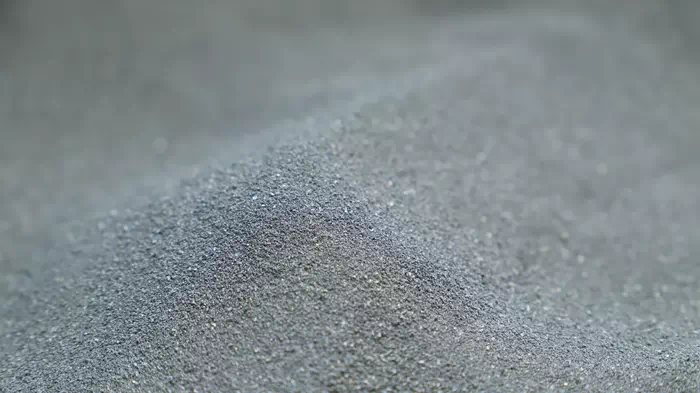
Finally, the electrostatic separator separates aluminum and plastic based on their differences in electrical conductivity. After process optimization for different material compositions and operating conditions, the purity of the recovered aluminum powder can typically reach 99.8% or higher.
Recycling Value and Advantages
Compared with traditional manual sorting methods, aluminum-plastic separation equipment enables continuous and stable operation while significantly reducing labor requirements. The production line can also be configured with different capacities according to processing demands, making it suitable for pharmaceutical manufacturers, recycling companies, and medical packaging recovery projects.
Although the aluminum content in a single blister pack is relatively small, the enormous volume of pharmaceutical packaging waste generated each year creates considerable.
Recommend products
CONTACT US:
If you have any requirement or suggestion, please fill in the form and send to us, thanks!E-mail:[email protected] | Whatsapp:+8613674945231