Four Wheeler Glass Scrap Recycling Machine
Car windscreens are a typical example of laminated materials, consisting of two layers of glass bonded together with a PVB film in the middle. Traditional processing methods struggle to achieve efficient separation and recycling; however, specialised laminated glass recycling equipment is the key to solving this problem. It can effectively separate the glass from the PVB film in waste windscreens, enabling resource reuse and enhancing recycling value.

Four Wheeler Glass Scrap Recycling Machine
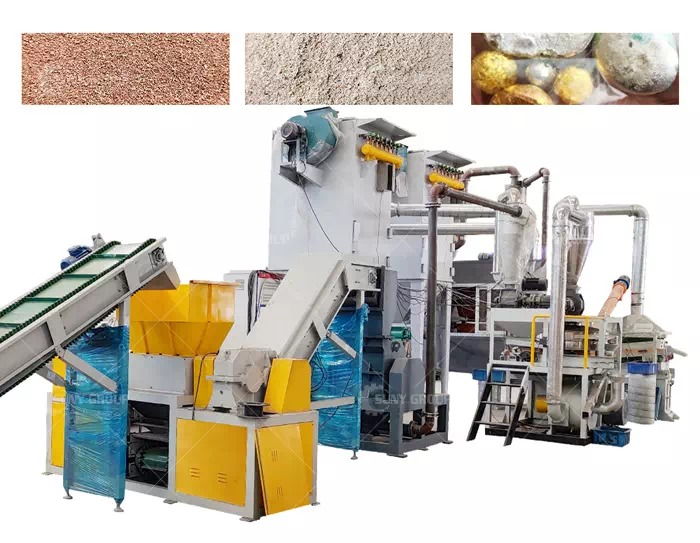
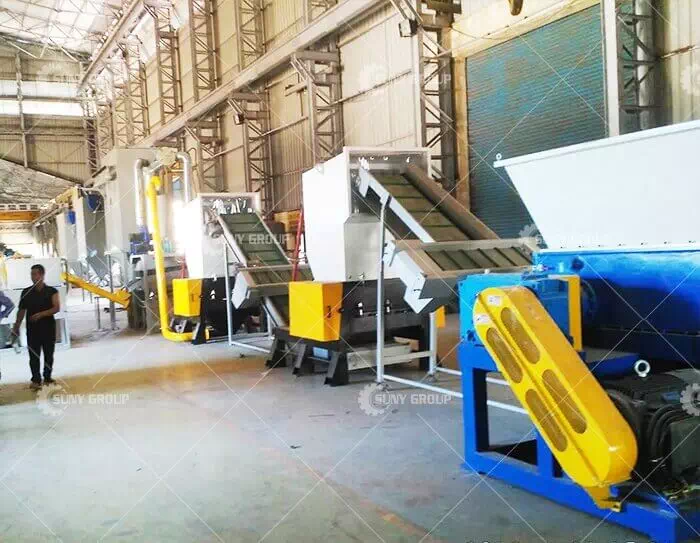
Equipment Composition: Two Core Modules for Efficient Separation
Given the unique nature of the laminated structure, this recycling system primarily consists of two major components: the ‘Windscreen Pre-compression Machine’ and the ‘PVB-Glass Separator’. The pre-compression machine performs preliminary processing on the entire piece of waste windscreen. Through mechanical compression, it alters the bond between the glass and the PVB film, inducing a tendency for delamination. This step is crucial for the efficiency of subsequent separation.
Following pre-treatment, the material enters the PVB glass separator, where specific crushing, agitation, and screening mechanisms gradually separate the glass particles from the PVB film. The entire process emphasises continuity and stability, avoiding the low efficiency and high wastage associated with traditional manual disassembly.
Working Principle: Systematic Processing from ‘Crushing’ to ‘Separation’
The operational logic of the equipment goes beyond simple crushing; it centres on ‘directed separation’. During the pre-compression stage, pressure and angle are controlled to loosen the laminated structure without complete fragmentation, thereby preserving the integrity of the PVB film. This is followed by the separation stage, which utilises the differences in toughness and density between the materials to achieve separation through mechanical action.
The glass component is crushed into relatively uniform particles, ready for direct entry into the recycled glass utilisation process; meanwhile, the PVB film is recovered in a relatively intact form, facilitating subsequent reprocessing and utilisation, such as in the production of recycled plastic products or industrial additives. The entire process minimises material mixing and enhances the purity of the recovered materials.
Application Value: Enhancing Recycling Efficiency and Economic Returns
Compared to traditional processing methods, the greatest advantage of this type of equipment lies in its ability to ‘combine efficiency with value’. On the one hand, the automated process significantly reduces manual intervention and increases processing capacity, making it suitable for scenarios such as vehicle dismantling plants and recycling enterprises; on the other hand, the separated PVB film is a high-value-added material, and its recovery and reuse can significantly boost overall returns.
Furthermore, the equipment features a relatively compact design and stable operation, demonstrating good adaptability to windscreens of varying specifications, thereby reducing adjustment costs associated with material variations. Against the backdrop of increasingly stringent environmental regulations, this specialised processing equipment is gradually becoming the industry standard.
Recommend products
CONTACT US:
If you have any requirement or suggestion, please fill in the form and send to us, thanks!E-mail:sunymachine@gmail.com | Whatsapp:+8613674945231