Lithium Battery Recycling and Recycling Machines
Lithium battery recycling and recycling machines constitutes an industrial system centred on safe processing and resource recovery. Through discharge, crushing, thermal treatment, and fine sorting, it transforms waste power batteries and consumer batteries into reusable materials such as copper, aluminium, and black powder. This approach not only reduces environmental risks but also significantly enhances resource recovery efficiency, making it an indispensable component of the current new energy industry chain.
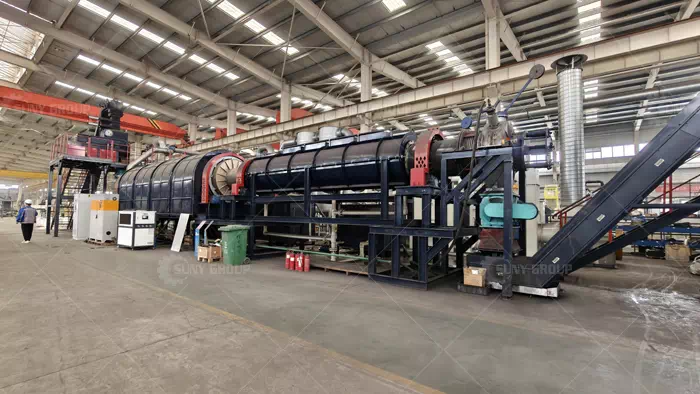
Core Equipment Configuration: From ‘Safe Processing’ to ‘Efficient Separation’
A mature lithium-ion battery recycling production line is not a single piece of equipment but rather a systematic engineering project that involves the coordinated operation of multiple stages. The first stage is the discharge unit, which uses brine immersion or specialised discharge equipment to release residual charge completely; this is a prerequisite for the safety of the entire process. The material then enters a twin-shaft shredder, which breaks the batteries down into small, manageable pieces. This is typically accompanied by a nitrogen protection system to prevent combustion or explosions caused by short circuits or friction.
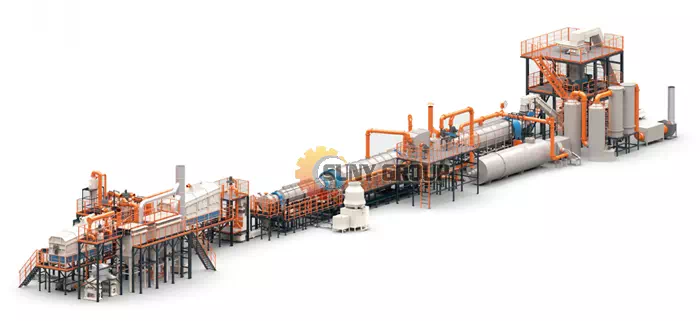
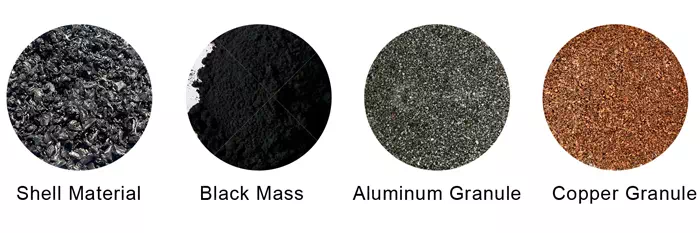
Next comes the pyrolysis or drying system, which removes electrolytes and organic matter through controlled temperature, creating stable conditions for subsequent sorting. The material then proceeds to grinding or hammer mill equipment, ensuring complete separation of the metal foil from the active material. Finally, a combination of magnetic separation, air classification, and gravity separation processes precisely separates black powder, copper, aluminium, and plastic, achieving material-grade recovery.
Key Technical Indicators: Core Parameters Determining Equipment Value
Equipment performance is not judged by ‘whether it can do the job’, but by ‘how cleanly and stably it performs’. Taking typical technical indicators as an example, both aluminium metal recovery and powder recovery rates can reach 98%, whilst cross-contamination between metals and powders is controlled to within 2%, which directly determines downstream reuse value. The line-wide pass rate can reach 99%, with a failure rate controlled at around 1%, indicating high operational stability.
In terms of configuration, different models cater to varying production capacity requirements. For instance, the LIBR-1000A and LIBR-1000B specifications offer processing capacities of 800–1,000 kg/h, with power and equipment dimensions increasing in line with the scale of the production line. In actual projects, these parameters often need to be customised according to the client’s raw material types, battery varieties, and production capacity targets, rather than simply applying standard solutions.
System Design Logic: Balancing Safety, Environmental Protection, and Scalability
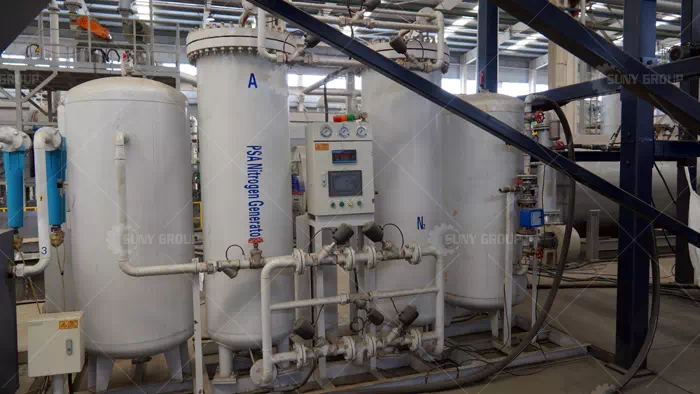
Nitrogen Shielding System
The true barrier to entry for lithium-ion battery recycling equipment lies not in individual machines, but in system design capability. Firstly, there is the closed-loop safety design: from discharge to crushing and on to thermal treatment, the entire process requires explosion-proof, fire-resistant, and inert gas protection. Secondly, there is the environmental protection system; the exhaust gas treatment unit must effectively filter harmful gases to ensure emissions meet regulatory standards, otherwise the project cannot proceed.
Finally, there is the design for scalability. The recycling industry exhibits significant economies of scale; whilst small-scale pilot lines and large-scale industrial lines share structural similarities, they differ markedly in terms of automation levels, continuous operation capabilities, and maintenance costs. A mature equipment solution should support modular expansion, enabling smooth upgrades as the business grows, rather than requiring a complete overhaul.
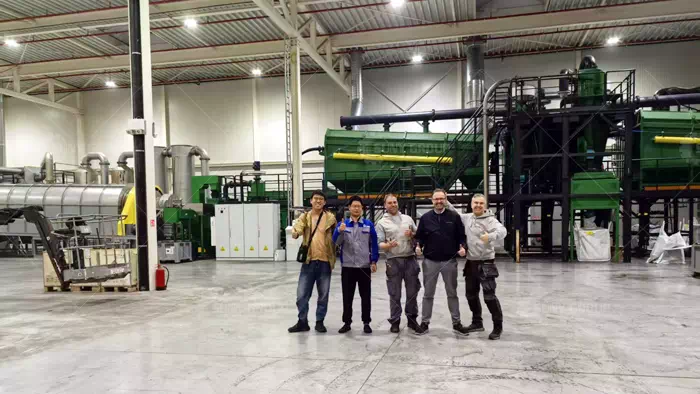
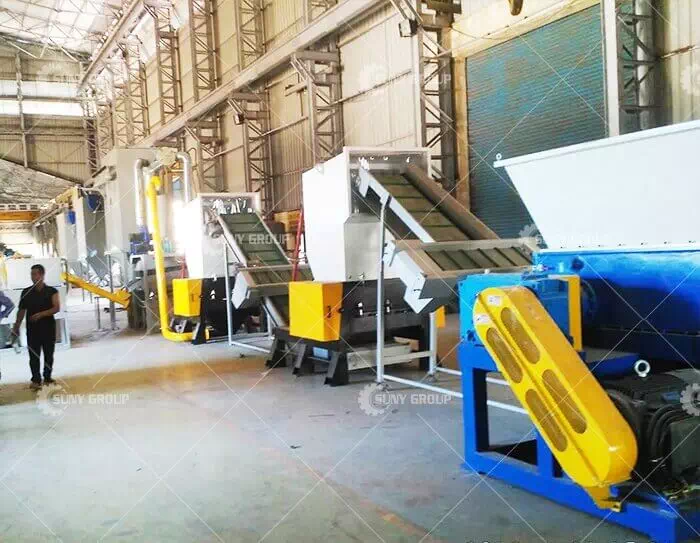
Lithium Battery Recycling Machines Site — Belgian Client
From an equipment perspective, lithium-ion battery recycling is not merely a matter of crushing and sorting, but rather a systematic engineering process centred on safety, efficiency, and the maximisation of material value. For enterprises, selecting the right equipment configuration and process route is more critical than simply pursuing technical specifications; this is also the core variable influencing the project’s long-term returns. Should you be interested or wish to learn more, please feel free to contact us at any time for further consultation.
Recommend products
CONTACT US:
If you have any requirement or suggestion, please fill in the form and send to us, thanks!E-mail:sunymachine@gmail.com | Whatsapp:+8613674945231