Machines for the Recycling of Lithium-ion Batteries
With the rapid advancement of new energy vehicles, energy storage systems, and consumer electronics, the usage of lithium-ion batteries continues to rise. Concurrently, a substantial volume of spent batteries is reaching the end of their service life. Without proper processing, these batteries not only represent a waste of resources but also pose potential environmental hazards. Consequently, specialised lithium-ion battery recycling equipment has become an integral component of the renewable resources sector. SUNY GROUP's advanced lithium battery recycling production line effectively extracts valuable materials from batteries, enabling resource circularity.
Multi-Type Battery Processing Capability
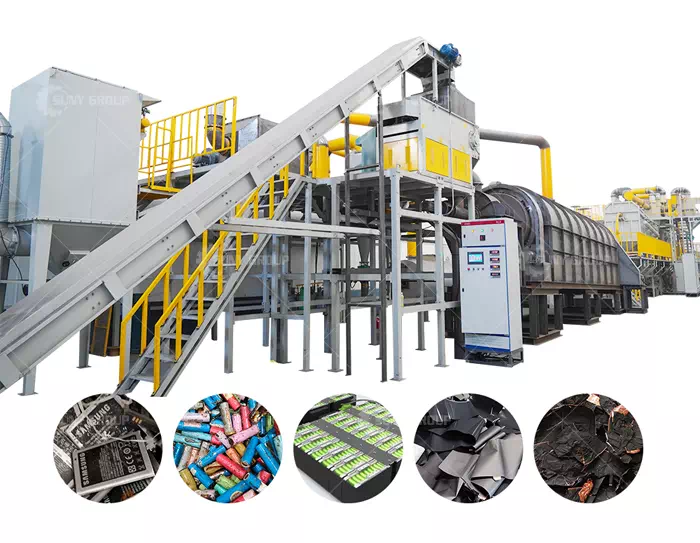
This lithium-ion battery recycling equipment typically offers strong compatibility, capable of processing batteries with diverse structures. Common types such as 18650 cylindrical cells, pouch cells, and prismatic cells can all be handled by the same system. These batteries are extensively utilised in electric vehicles, power tools, energy storage systems, and various consumer electronics, necessitating the equipment's high adaptability.
During the recycling process, spent batteries first undergo crushing and pre-treatment. Specialised equipment breaks down the batteries, releasing internal metallic materials and electrode powders, thereby laying the groundwork for subsequent separation and purification. This automated approach not only enhances efficiency but also mitigates safety risks associated with manual handling.
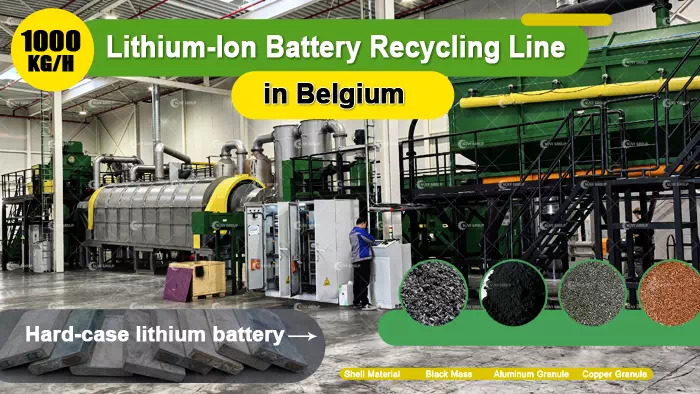
1000 KG/H Lithium-lon Battery Recycling Line in Belgium
Carbonisation and Material Separation System
Within lithium battery recycling production lines, carbonisation technology represents a critical stage. High-temperature carbonisation systems remove organic electrolytes and binders from batteries while facilitating easier material separation. Post-carbonisation materials proceed to crushing and screening systems, where multi-stage sorting equipment separates copper, aluminium, and black powder, among other materials.
Black powder represents one of the most valuable components in battery recycling, containing multiple rare metals, including lithium, cobalt, and nickel. Subsequent smelting or chemical extraction processes enable the further recovery of these critical resources, achieving high-value recycling.
Comprehensive Recycling Solutions and Multi-Sector Applications
A complete lithium-ion battery recycling system typically comprises crushing equipment, carbonisation units, sorting systems, and dust extraction apparatus. These components are interconnected via automated conveyor systems to form a continuous production process. This design not only enhances operational efficiency but also ensures the entire recycling operation is more environmentally sustainable and safer.
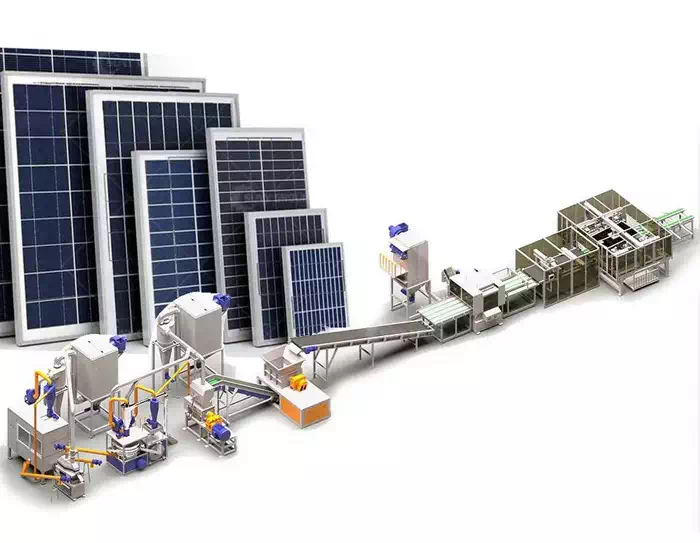
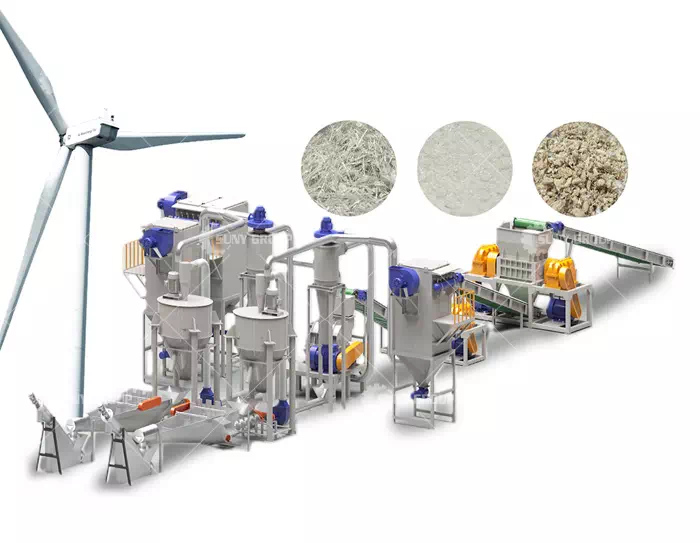
Beyond lithium-ion battery recycling equipment, modern resource recovery enterprises also deploy other specialised systems, such as solar photovoltaic panel recycling machinery, electronic waste processing units, and metal crushing and sorting production lines. Collectively, these form a comprehensive resource circularity framework.
Should you require specific technical solutions or detailed information regarding lithium battery recycling equipment, please do not hesitate to contact us.
Recommend products
CONTACT US:
If you have any requirement or suggestion, please fill in the form and send to us, thanks!E-mail:[email protected] | Whatsapp:+8613674945231