Aluminum-Plastic Packaging Recycling Line for Composite Waste
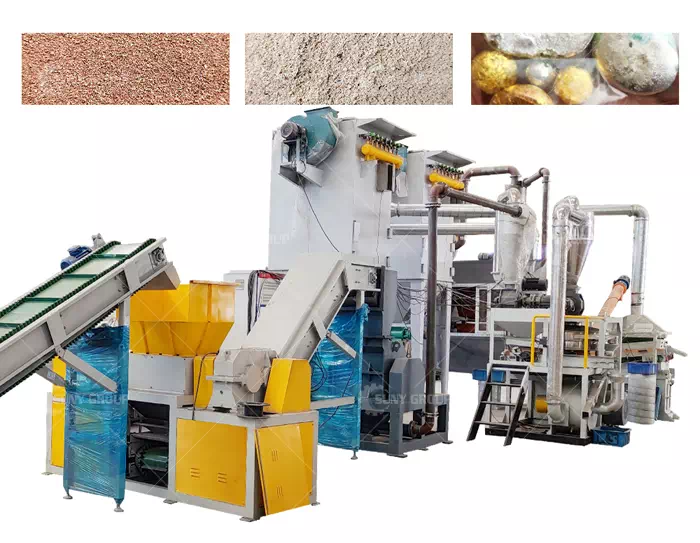
The aluminium-plastic flexible packaging recycling and sorting production line developed by SUNY GROUP is primarily used to process waste from pharmaceutical blister packs, aluminium-plastic composite films, and personal care product packaging. Through crushing, grinding, and electrostatic separation, the aluminium layer is separated from the plastic layer, recovering aluminium powder and plastic powder to provide raw materials for subsequent metal smelting and plastic reprocessing.
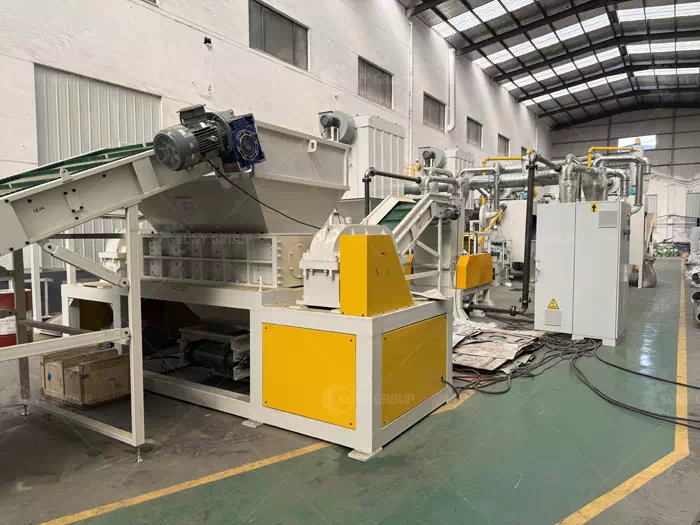
Aluminum-Plastic Packaging Recycling Line for Composite Waste
Key Equipment of the Aluminium-Plastic Packaging Recycling Production Line
Aluminium-plastic composite packaging typically consists of aluminium foil, plastic film or other composite materials, and is characterised by its light weight, high flexibility and strong interlayer bonding. It is difficult to effectively separate the aluminium and plastic using conventional mechanical sorting methods alone. Consequently, this type of production line requires multiple processing stages to achieve material separation and classification.
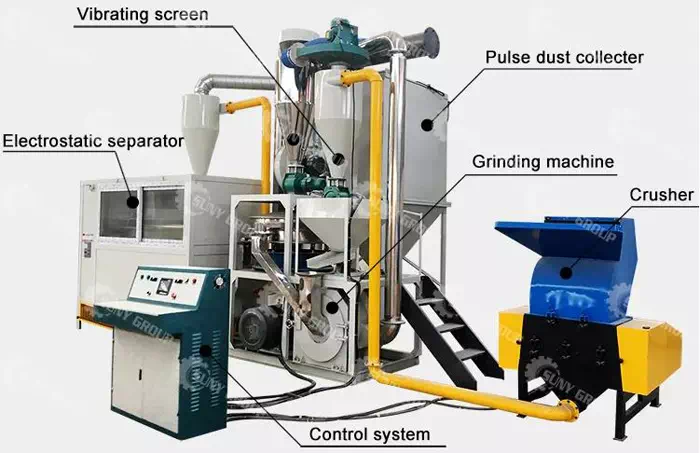
The complete set of equipment primarily consists of a crusher, a grinding mill, and an electrostatic separator, with each piece of equipment performing a distinct processing task.
Crusher: This breaks down whole sheets or rolls of aluminium-plastic flexible packaging into smaller, flake-like material to facilitate subsequent conveying and grinding. The effectiveness of the crushing process affects the stability of feed to downstream equipment.
Grinding Mill: Further refines the crushed material, enabling the aluminium and plastic layers to gradually separate. The grinding particle size must be adjusted according to the packaging structure and material thickness to avoid insufficient separation caused by excessively coarse particles, whilst also preventing over-grinding, which increases energy consumption and the burden of dust management.
Electrostatic Separator: Utilises the differences in electrical properties between aluminium and plastic to separate the dissociated mixture into different material fractions. The actual separation efficiency depends on the dryness of the material, particle size distribution, degree of dissociation, and equipment parameters.
Aluminium-Plastic Separation Process and Applications of Recovered Materials
During the production process, waste packaging first enters a shredder; following initial volume reduction, it is conveyed to the grinding equipment. The core objective of the grinding stage is not merely to reduce particle size, but to disrupt the bond between the aluminium and plastic layers as much as possible, so that the two materials form discrete particles suitable for separation.
Subsequently, the mixture enters an electrostatic separation system. The equipment separates the materials based on their respective electrical charge and conductivity properties, ultimately yielding aluminium material and plastic powder.
The recovered aluminium material can undergo further processing—such as briquetting or other pre-treatment—depending on its purity, particle size and impurity content, before being fed into a suitable aluminium smelting process. The plastic fraction is assessed for suitability for pelletisation and recycling based on resin type, cleanliness and processability.
It should be noted that the effectiveness of aluminium-plastic separation does not depend solely on the electrostatic separator itself. If the aluminium and plastic layers remain adhered after grinding, contamination may occur even if the separation equipment is operating normally. Therefore, when selecting production line configurations, particular attention should be paid to material separation efficiency, aluminium recovery rate, product purity, energy consumption per unit of processing, and dust control capabilities.
Recommendations for Equipment Selection and Production Line Configuration
For different raw materials, such as pharmaceutical blister packs, aluminium-plastic composite films and waste from personal care packaging, it is recommended to conduct actual material testing prior to procurement. Particular attention should be paid to confirming the aluminium content, plastic type, moisture content, composite layer structure, and impurity ratio of the raw materials before determining the crushing particle size, grinding parameters and electrostatic separation configuration.
Furthermore, as the aluminium-plastic recycling process tends to generate fine powder, equipment configuration should incorporate enclosed conveying, dust collection, and necessary electrical safety measures. For enterprises planning continuous production, the processing capacity of the equipment, the replacement cycles of wear parts, and the maintenance costs of the entire production line should also be assessed.
If you are interested in this machinery or have any requirements, please feel free to contact us at any time for further information!
Recommend products
CONTACT US:
If you have any requirement or suggestion, please fill in the form and send to us, thanks!E-mail:[email protected] | Whatsapp:+8613674945231