Machine for Separation Paper from Aluminium
Paper-aluminium separation equipment is a specialised production line designed for the resource recovery of composite packaging materials (such as Tetra Pak cartons and paper cups). Through mechanical crushing, hydraulic disintegration, and multi-stage separation processes, it effectively separates paper fibres, plastic, and aluminium, enabling resource reuse and improving waste treatment efficiency.
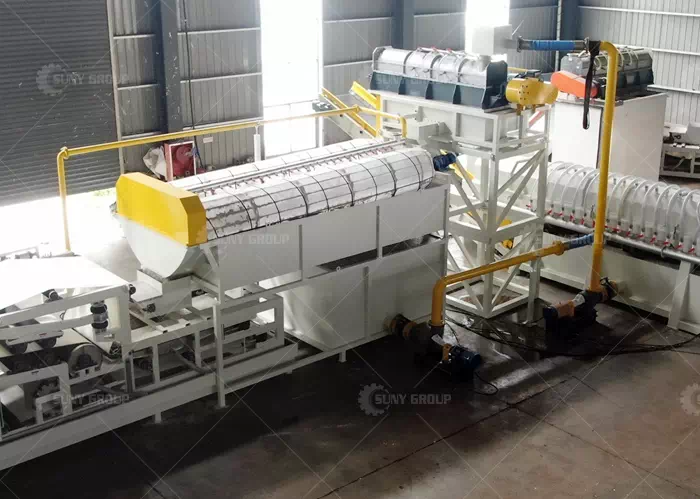
Machine for Separation Paper from Aluminium
Overall Line Configuration and Core Equipment
This paper-plastic-aluminium separation production line is designed for continuous operation, with the entire line configured to follow a ‘conveying – delamination – separation – dewatering’ process. A chain conveyor is employed at the front end to feed waste composite materials evenly into the processing system, reducing manual intervention and improving feed stability.
The core equipment is the paper-plastic separator, which utilises high-speed agitation and hydraulic forces to thoroughly disassociate paper fibres from the composite layers. This process does not rely on high temperatures or chemical agents, but primarily achieves dispersion through mechanical force, thereby reducing operating costs and minimising the risk of secondary pollution.
Following initial separation, the system proceeds to the pulp processing stage, which incorporates a pulp screening unit to further remove any remaining impurities and improve fibre purity. The entire line features a compact design with seamless integration between equipment, making it suitable for continuous operation.
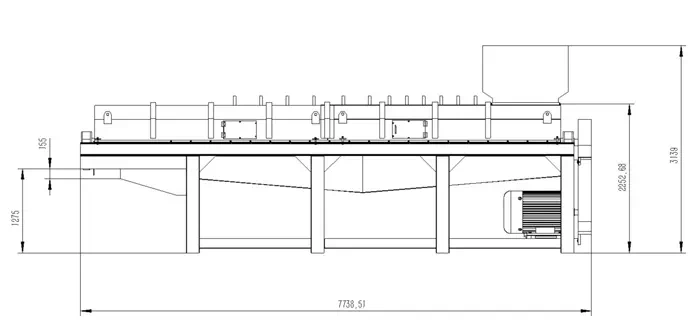
Dehydration and Resource Recovery Stage
The separated pulp has a high moisture content and requires processing via multi-stage dehydration equipment. First, a pulp dewatering machine performs preliminary filtration to remove the majority of the moisture; the pulp then proceeds to a pulp filter press for deep dewatering, bringing it to a state suitable for storage or further processing.
Meanwhile, the separated plastic and aluminium composites can undergo subsequent fine sorting or be sold for external processing, enabling the graded utilisation of various resources. The entire system is designed to balance material recovery rates with processing efficiency, making it particularly suitable for the centralised processing of large volumes of waste packaging.
Configured for a processing capacity of one tonne per hour, this production line meets the daily operational requirements of small and medium-sized recycling enterprises, whilst offering scope for expansion through modular upgrades tailored to actual production capacity.
Application Scenarios and Operational Characteristics
This separation equipment is primarily used to process aluminium-containing composite packaging waste, including milk cartons, Tetra Pak packaging, and disposable paper cups. Such materials have complex structures that are difficult to separate effectively using traditional methods; however, this specialised production line ensures stable processing.
In terms of operational characteristics, the equipment prioritises automation and continuous operation, reducing manual intervention and enhancing production efficiency. Furthermore, the entire line employs physical separation processes, minimising environmental impact and aligning with current eco-friendly processing trends.
Moreover, the equipment features a relatively mature design with clearly defined maintenance cycles, making it suitable for long-term, stable operation. It offers practical value for enterprises seeking to enter the renewable resources sector. Should you be interested or require further information, please do not hesitate to contact us at any time!
Recommend products
CONTACT US:
If you have any requirement or suggestion, please fill in the form and send to us, thanks!E-mail:[email protected] | Whatsapp:+8613674945231