Metal and Non-metal Waste Separator
When processing mixed waste materials, such as aluminium-plastic and copper-plastic composites, traditional manual sorting methods are inefficient and costly. In contrast, the use of specialised equipment can significantly improve sorting results. Among these, the eddy current separator serves as a core piece of equipment and is widely used in various metal recycling production lines.
How Eddy Current Separators Work
Eddy current separators primarily utilise the principle of electromagnetic induction to achieve separation. When material containing non-ferrous metals passes through a high-speed rotating magnetic roller, conductive metals (such as aluminium and copper) generate eddy currents under the influence of the magnetic field, thereby creating a counter-magnetic field. This force ejects the metal particles, whilst non-metallic materials continue to fall along their original trajectory.
In this way, the equipment achieves rapid separation of non-ferrous metals from non-metallic materials. The entire process requires no chemical treatment and produces no secondary pollution; it also offers high sorting efficiency and is suitable for continuous production.
Equipment Structure and Scope of Application
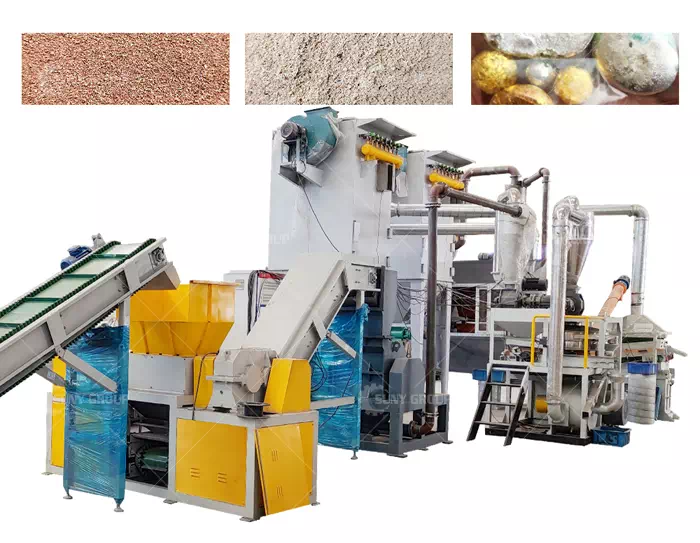
Eddy current separation equipment typically consists of a conveyor system, a magnetic roller system, and a sorting unit. Material enters the sorting area evenly via a conveyor belt and is separated under the action of high-speed magnetic rollers. The equipment is compact in structure, operates stably, and can accommodate the processing requirements of materials with varying particle sizes.
This equipment is widely used in the sorting of waste cables, aluminium-plastic composite panels, electronic waste, and household waste. For complex materials such as aluminium-plastic composites and copper-plastic mixtures, eddy current separators can effectively extract valuable metals, thereby increasing recycling yields.
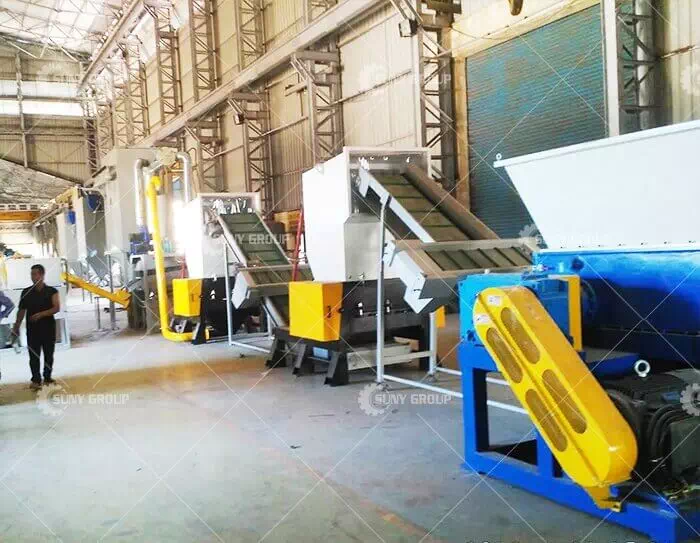
Compared to traditional sorting methods, eddy current separators offer advantages such as a high degree of automation, high throughput, and high sorting accuracy. When used in combination with crushers, screening equipment, and other machinery, they can form a complete recycling and processing production line, enabling end-to-end operations from raw material processing to material separation.
Against the backdrop of the ongoing advancement of resource recycling, this type of equipment has become an integral part of the metal recycling industry. By efficiently separating non-ferrous metals and non-metallic materials, it not only improves resource utilisation but also delivers greater economic value to enterprises.
Recommend products
CONTACT US:
If you have any requirement or suggestion, please fill in the form and send to us, thanks!E-mail:[email protected] | Whatsapp:+8613674945231