Radiator Recycling Machine to Copper and Aluminum
Scrap car radiators, air-conditioning radiators and industrial heat exchangers typically contain copper tubes, aluminium fins and a small amount of iron. Radiator recycling machines use mechanical processes such as cutting, shredding, crushing, magnetic separation and air classification to separate the mixed metals into copper, aluminium and iron, providing pure raw materials for subsequent metal recycling.
How Radiator Recycling Equipment Achieves Copper-Aluminium Separation
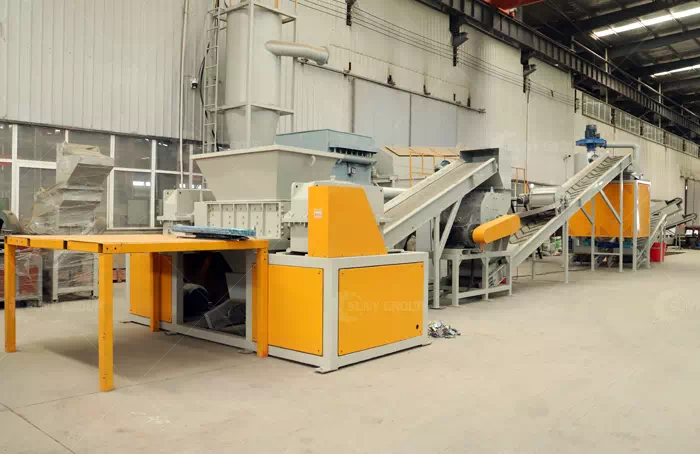
Radiator Recycling Machine to Copper and Aluminum
The challenge with radiators lies not merely in ‘crushing’, but in ensuring that the copper and aluminium retain a particle size and form suitable for separation after crushing. Consequently, a complete Copper-Aluminium Radiator Recycling Line typically employs multi-stage processing rather than relying on a single crushing unit to perform the entire task.
Firstly, scrap radiators are fed via a conveyor into a twin-shaft shredder or cutting equipment. For larger automotive radiators, air-conditioning radiators and industrial heat exchangers, pre-treatment reduces the material size, ensuring a more consistent feed for subsequent equipment.
The material then enters a hammer mill or high-speed crusher for secondary crushing, further separating the copper tubes, aluminium fins and iron components. Some production lines use screens to control the output particle size—for example, processing the material to the millimetre range—to improve the effectiveness of subsequent sorting.
The crushed mixture is fed into a magnetic separator, which utilises magnetic differences to remove iron-containing impurities such as iron frames and screws. The remaining copper-aluminium mixture is then fed into air classification or density separation equipment, where it is separated based on the differences in density, particle size and aerodynamic properties between copper and aluminium. Some systems are also equipped with negative-pressure air classification and dust collection units to reduce dust generated during the crushing process.
Core Equipment Configuration and Actual Selection
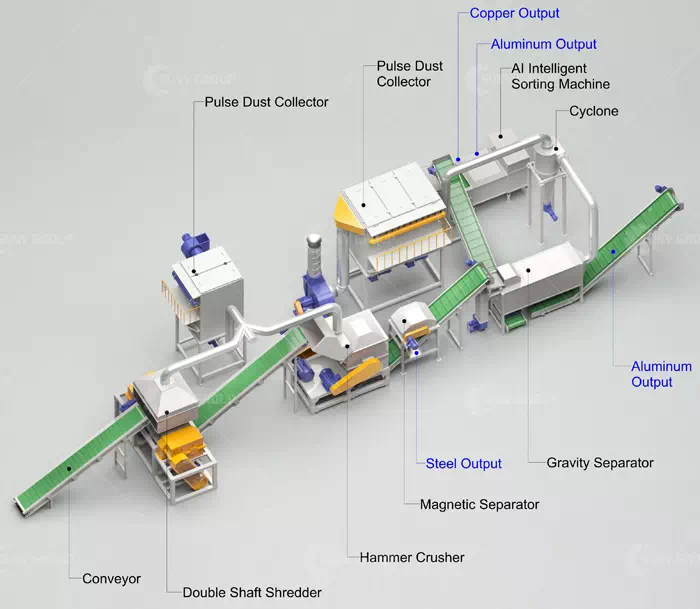
Structural Diagram of Radiator Recycling Machine
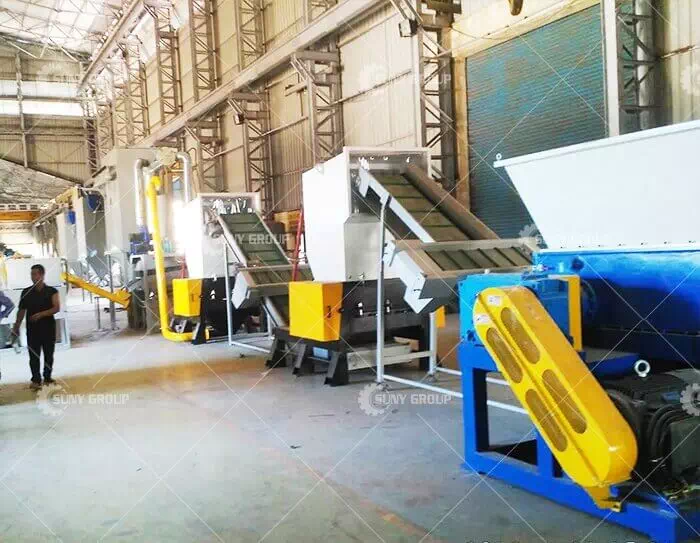
A relatively complete radiator recycling production line typically comprises:
Feeding Conveyor: Supplies material to the main unit continuously and uniformly;
Double-Shaft Shredder: Processes large-sized radiators to achieve initial volume reduction;
Hammer Crusher / Metal Crusher: Further crushes the material and promotes the separation of copper and aluminium;
Magnetic Separator: Removes ferromagnetic metals from the mixture;
Air Separator / Gravity Separator: Separates copper and aluminium based on differences in density and aerodynamic properties;
Dust Collection System: Centrally collects dust generated during the crushing and air separation processes;
PLC Control System: Coordinates the operation of conveying, crushing, and sorting equipment.
From Waste Radiators to Reusable Metals
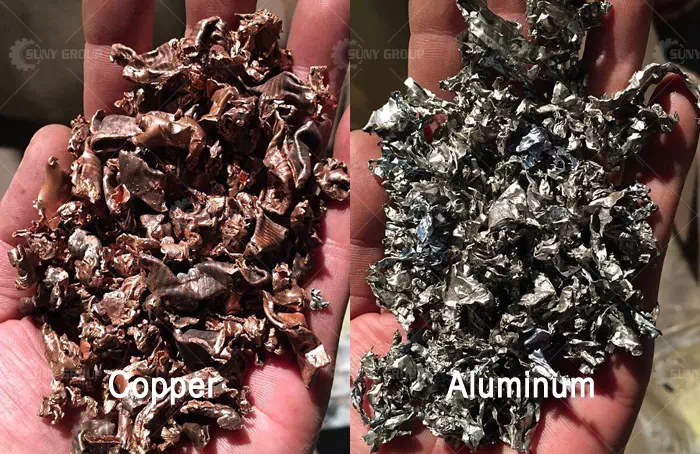
Processed Copper and Aluminum
The core value of the Radiator Recycling Machine lies not merely in reducing the volume of waste, but in enhancing the independent recovery rate of valuable metals such as copper and aluminium through liberation and sorting. With appropriate equipment configuration, distinct material streams—including copper, aluminium and iron—can ultimately be produced, facilitating separate storage, transport and progression to subsequent smelting or reprocessing stages.
For recycling enterprises, equipment selection should focus on three key aspects: raw material type, target processing capacity and the final requirements for copper and aluminium separation. If the specifications of the raw materials are relatively uniform, a simpler stripping machine may be used; however, if automotive radiators, air-conditioning radiators and mixed heat exchangers are to be processed simultaneously, a complete crushing and sorting line is generally more suitable.
Through physical methods such as mechanical crushing, magnetic separation and air classification, the copper and aluminium in waste radiators can be reclaimed from mixed scrap as usable metal resources; this is also the primary process approach employed by the Radiator Recycling Machine in scrap metal recovery.
Recommend products
CONTACT US:
If you have any requirement or suggestion, please fill in the form and send to us, thanks!E-mail:sunymachine@gmail.com | Whatsapp:+8613674945231