Rotary Coco & Palm Fiber Cutting Machine
This article provides an in-depth analysis of the technical parameters, structural advantages, and high-throughput performance of the rotary-type fiber cutting machine in biomass recycling.
Model Range: High Throughput and Power Optimization
In the primary processing of tough, high-tensile biomass fibers such as coconut fiber, palm fiber, and Empty Fruit Bunches (EFB), minimizing material tangling is critical. This series offers five standardized configurations designed for industrial scalability. By optimizing the rotational torque of the cutter shaft, these machines ensure continuous feeding and highly uniform output sizes.
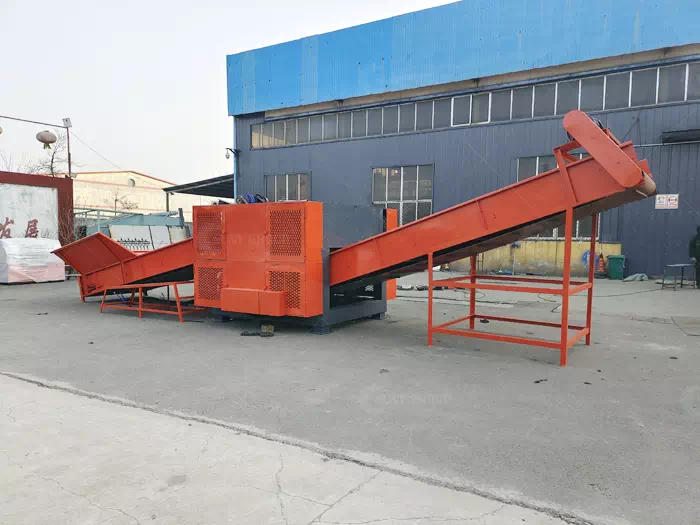
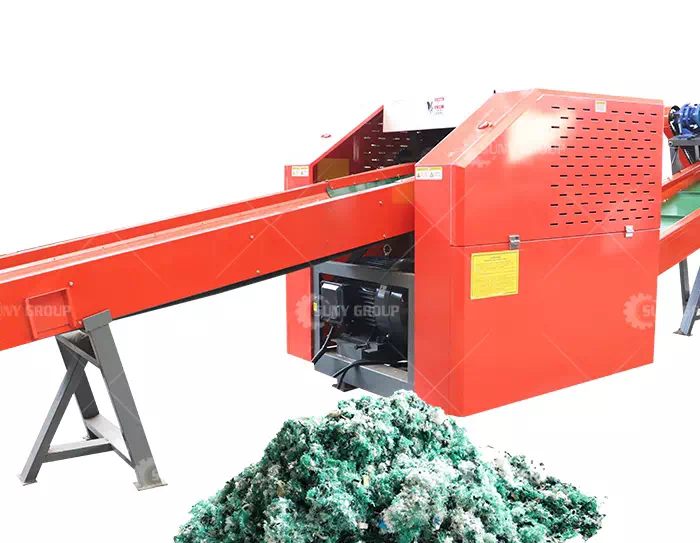
Rotary Coco & Palm Fiber Cutting Machine
The core technical parameters of the rotary-type fiber cutting series are detailed below:
| Model | Power (Kw) | Machine Dimensions (M) | Capacity (Kg/H) |
| SC-S350 | 55 | 2.52*1.35*1.7 | 400-600 |
| SC-S450 | 90 | 3.15*1.47*1.7 | 1000-1500 |
| SC-S550 | 110 | 3.2*1.78*2.15 | 2000-3000 |
| SC-S650 | 160 | 3.35*1.9*2.3 | 3000-4000 |
| SC-S850 | 250 | 3.5*2.25*2.5 | 4000-5000 |
Ranging from the pilot-scale SC-S350 (55 kW, with a capacity up to 600 kg/h) to the large-scale industrial line SC-S850 (250 kW, reaching up to 5 tons per hour), the scaling of power directly correlates with larger cutting chamber volume and optimized blade density. This robust engineering prevents motor overload and unexpected downtime during intensive operation.
Rotary Cutting Process and Structural Advantages
Conventional shredders often suffer from fiber wrapping around bearings or blade seat deformation when handling long, high-strength materials like palm EFB. This rotary-type cutting system mitigates these mechanical challenges through three specific design principles:
Uniform Cutting Length: The clearance between the rotary blades and the counter blades is fully adjustable. The high-speed impact cuts through tough fibers instantly, ensuring precise control over the output size. This provides standardized raw material for downstream volume reduction, transport, pelletizing, or composting.
Continuous Feeding System: A wide-infeed hopper configuration paired with mechanized conveyor belts enables uninterrupted material input. Dynamic balancing of the knife shaft minimizes structural vibration, ensuring long-term operational stability.
Low Maintenance and Wear-Resistant Tooling: To counteract the abrasive nature of sand and soil often mixed with raw biomass, the blades are manufactured from high-strength alloy steel. The modular blade mounting design significantly reduces the replacement time for wear parts.
Crucial Front-End Processing for Biomass Recycling
Integrating the SC series cutting machine addresses the key logistical and processing bottlenecks caused by the low bulk density and high looseness of natural fibers. Post-processing, the processed fiber exhibits increased bulk density and vastly superior material flowability. This critical transformation significantly enhances compression rates in subsequent pellet mill operations, making it an essential asset for solid waste valorization.
Recommend products

CONTACT US:
If you have any requirement or suggestion, please fill in the form and send to us, thanks!E-mail:[email protected] | Whatsapp:+8613674945231